Authorized Ansul Distributors & Service Providers in Los Angeles
We are authorized distributors and service providers for Ansul fire suppression systems, specializing in R-102 and Automan units. Whether you need a new installation for a restaurant build-out, routine inspection, or an emergency recharge after a discharge, our factory-trained technicians are ready 24/7. We provide complete service backed by certified expertise to keep your kitchen compliant and safe.
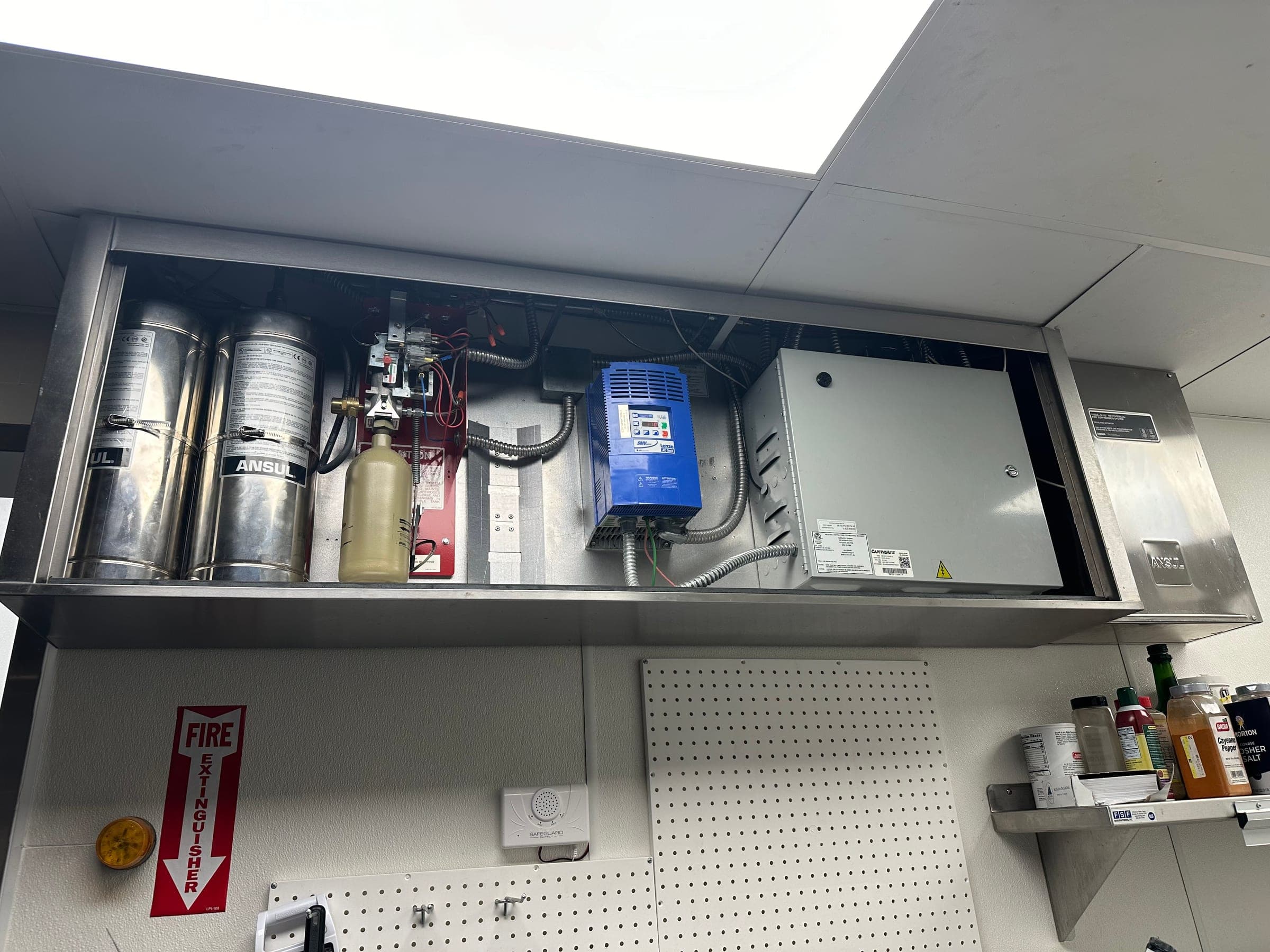
ANSUL R-102 agent tanks and release assembly in their cabinets above a commercial cooking line.
CSLB C-16 #976500
24/7 Emergency Service
R-102 · AUTOMAN
Authorized Ansul Distributor
Why Choose Ansul Systems?
Ansul has been the industry leader in kitchen fire suppression for over 60 years. Their wet chemical systems are specifically engineered to combat the unique hazards of commercial cooking operations, including high-temperature cooking oils and grease-laden environments.
UL 300 Listed
Meets stringent testing standards for modern cooking equipment.
Rapid Knockdown
Wet chemical agent quickly suppresses flames and prevents re-flash.
Easy Cleanup
Non-corrosive agent allows for faster kitchen recovery.
Ansul Systems We Service
Ansul R-102
The industry-leading wet chemical fire suppression system for commercial kitchens. Designed for high-efficiency cooking equipment including fryers, griddles, and ranges.
The Ansul R-102 is a pre-engineered wet chemical fire suppression system designed to protect commercial cooking equipment and associated ventilation hazards.
It uses ANSULEX liquid fire suppressant to help extinguish cooking fires, cool heated surfaces, and reduce the possibility of re-ignition.
Depending on the listed design, R-102 protection can use appliance-specific nozzle arrangements or approved overlapping coverage configurations.
Its AUTOMAN release assembly is the mechanical part of the system, not a separate system: an automatic/manual release that provides reliable detection and activation for kitchen hood protection.
Because the release mechanism plays a critical role in suppression system operation, its condition, configuration, and associated components must be included in appropriate maintenance procedures. SOS Fire Services inspects and services AUTOMAN release components as part of R-102 maintenance and repairs.
Typical applications include:
Commercial deep-fat fryers
Flat-top griddles
Cooking ranges
Char-broilers and broilers
Woks and other listed cooking hazards
Exhaust hoods, plenums, and duct protection where specified
SOS Fire Services provides R-102 inspection, maintenance, repair, recharge, and installation services.
Custom design and professional installation of Ansul R-102 systems for new restaurant build-outs.
Read moreShow less about Installation & Design
Opening a new restaurant, expanding your kitchen, or installing a new commercial cooking line?
Our work can include evaluating the cooking equipment and hood arrangement, selecting an appropriate suppression configuration, preparing the required system design, coordinating permit and plan-review requirements, installing equipment, and supporting the required acceptance process.
Each system must be designed around the actual cooking hazards, equipment locations, ventilation configuration, and applicable manufacturer requirements.
We work with restaurant owners, general contractors, kitchen equipment suppliers, and project teams to coordinate fire suppression requirements during commercial kitchen build-outs.
Immediate recharging service using genuine Ansul wet chemical agents. We get you back up and running fast after a discharge or when agents expire.
Read moreShow less about 24/7 System Recharge
A discharged system needs professional evaluation and servicing before it can be restored to operational readiness. Replacing the extinguishing agent alone may not be sufficient.
Our post-discharge services can include:
Evaluating the cause and extent of the activation
Inspecting system components affected by the discharge
Servicing agent containers and actuation components
Recharging with the specified extinguishing agent
Replacing required cartridges, seals, and other components
Flushing the distribution piping to remove agent residue
Verifying detection and release operation using approved procedures
Comprehensive 6-month maintenance inspections per NFPA 17A and manufacturer requirements to ensure ongoing compliance.
Read moreShow less about Semi-Annual Inspections
Commercial kitchen fire suppression systems generally require professional maintenance at least every six months, with additional service when required by the equipment manufacturer, fire authority, or system condition.
Our Ansul inspection service includes evaluating the system's accessible components, inspecting detection and release equipment, reviewing nozzle coverage, checking the condition of agent containers, and verifying applicable shutdown functions through approved service procedures.
We document deficiencies, perform authorized maintenance, and provide applicable service records and tags. If repairs or modifications are needed, we explain what must be corrected before the system can be considered ready for service.
24/7 emergency response for system failures, accidental discharges, and critical mechanical repairs.
Read moreShow less about Emergency Repairs
A damaged detection line, missing nozzle cap, faulty release mechanism, or malfunctioning fuel shutoff can affect the reliability of your kitchen's fire protection.
Our technicians troubleshoot Ansul system problems and determine whether components require adjustment, repair, or replacement.
Common service requests include:
Damaged or misaligned discharge nozzles
Missing or deteriorated nozzle blow-off caps
Fusible link and detection-line deficiencies
AUTOMAN release mechanism problems
Damaged mechanical cables and associated hardware
Agent cylinder, cartridge, and actuator concerns
Manual pull station problems
Gas shutoff and electrical interlock issues
Deficiencies identified during fire department inspections
Repairs are performed using components and procedures appropriate to the installed system.
Certified 12-year hydrostatic testing of agent tanks, plus the 12-year regulator flow test, to ensure structural integrity and safety.
Read moreShow less about Hydrostatic Testing
Ansul agent containers and associated pressure components have specific inspection, maintenance, and periodic testing requirements.
Our technicians review the applicable cylinder identification, service history, condition, and manufacturer requirements to determine whether additional maintenance, testing, replacement, or removal from service is necessary.
Hydrostatic testing is performed when required for the specific container and applicable regulations. Under the R-102 manual, agent tanks are hydrostatically tested every 12 years, cartridges at intervals of no more than 12 years, and older red-painted steel tanks are replaced instead of tested.
06
Fusible Link Replacement
Scheduled replacement of heat-activated fusible links to maintain proper detection sensitivity (typically semi-annual or annual).
07
Nozzle Service
Cleaning, repositioning, and replacement of nozzles to ensure optimal coverage, specifically after cooking equipment has been moved.
Read moreShow less about Nozzle Service
Replacing a deep fryer? Moving a griddle? Adding a charbroiler or changing your cooking line? Your existing Ansul system may no longer provide the required protection for the new equipment arrangement.
Discharge nozzles are selected and positioned based on specific protected hazards and approved system configurations. Changing the appliance type, dimensions, position, or cooking surface may require the existing protection to be reevaluated.
Our technicians can review the updated kitchen layout and determine whether the existing system needs nozzle relocation, additional protection, piping changes, or a more extensive redesign.
Modifications and upgrades to existing systems to meet current UL 300 safety standards and code requirements.
Ansul Components We Inspect, Service & Replace
A properly maintained Ansul system depends on many interconnected components. During maintenance and repair, our technicians assess the parts applicable to your installed configuration.
Fusible Links & Detection Lines
Read moreShow less about Fusible Links & Detection Lines
Heat-sensitive fusible links and their associated detection hardware help initiate automatic system activation when specified conditions are reached. Inspection and replacement follow the applicable manufacturer's instructions, service requirements, and component condition.
Discharge Nozzles & Protective Caps
Read moreShow less about Discharge Nozzles & Protective Caps
Nozzles must be correctly installed, oriented, unobstructed, and positioned for their assigned hazards. We check nozzle condition and placement, including protective caps intended to reduce contamination from kitchen grease and debris.
Agent Cylinders & Actuation Cartridges
Read moreShow less about Agent Cylinders & Actuation Cartridges
We evaluate applicable agent storage containers, pressure or weight indications, cartridges, and actuation components according to the installed system requirements.
AUTOMAN Release Mechanisms & Control Cables
Read moreShow less about AUTOMAN Release Mechanisms & Control Cables
Release assemblies, detection cables, and mechanical actuation hardware are inspected for applicable operational and physical deficiencies.
Manual Pull Stations
Read moreShow less about Manual Pull Stations
Manual activation stations need to remain accessible, identifiable, and functional in accordance with the approved installation.
Gas Shutoff Valves & Electrical Interlocks
Read moreShow less about Gas Shutoff Valves & Electrical Interlocks
Commercial kitchen fire suppression systems are commonly integrated with cooking-fuel and electrical shutdown functions. We evaluate the applicable interfaces to help identify failures that could affect proper equipment shutdown during system activation.
Distribution Piping & Fittings
Read moreShow less about Distribution Piping & Fittings
Distribution lines and fittings are evaluated for visible damage, modifications, obstructions, and other deficiencies that may affect their intended function.
System Labels, Tags & Documentation
Read moreShow less about System Labels, Tags & Documentation
Service records, system identification, operating instructions, and maintenance tags help document the condition and service history of the protection system. Missing or outdated records can signal that a closer system review is needed.
Not sure which Ansul component is causing your problem? Tell us what you're experiencing and request service.
Signs Your Ansul System Needs Professional Service
Contact a qualified fire suppression service provider if you notice any of the following:
Your six-month inspection date has passed.
The system's service tag is missing, damaged, or out of date.
A nozzle is damaged, blocked, missing a cap, or no longer aligned with the equipment.
Your restaurant has added, moved, or replaced cooking appliances.
Your system discharged during a fire or accidental activation.
A gas shutoff valve or release mechanism is not operating as expected.
A fire inspector identified a system deficiency.
There is visible damage to the detection line, cylinder, piping, or manual pull station.
Your restaurant is preparing for a new opening or a change in ownership or use.
A system that appears intact is not necessarily ready for operation. Professional inspection and approved maintenance are essential to establishing its condition.
If you suspect that your fire suppression system is impaired, do not attempt to bypass or reset protective components yourself. Contact a qualified technician and follow the instructions of the responsible fire authority.
ANSUL's owner's guides say the system should be inspected at least monthly. Between professional services, your staff can check that:
Nozzle blow-off caps are in place and not covered in grease.
The manual pull station is unobstructed and has not been tampered with.
The visual inspection seals on the releasing unit are intact.
The visual indicator on the releasing unit shows the system is cocked.
Before
After
Before: Discharge nozzle caked with grease, found during a service visit. After: The same nozzle cleaned and capped, ready to discharge.
How Our Ansul Service Process Works
1
Tell Us About Your System
Contact SOS Fire Services with your location, Ansul model, service concern, and any recent changes to the kitchen. If available, a photo of the system identification label or inspection tag can help our team understand your equipment.
2
On-Site System Evaluation
A technician reviews the installed equipment, protected hazards, relevant service history, and reported problem.
3
Findings & Recommended Work
We explain applicable deficiencies, recommended corrections, and whether additional components, permits, or inspections may be required.
4
Service, Repair or Installation
Our technicians perform the approved scope of work using procedures and components appropriate to the system.
5
Documentation & Next Steps
We provide applicable service documentation, identify any outstanding items, and explain the next recommended inspection or maintenance interval.
Where formal approval is required, the appropriate authority having jurisdiction determines final acceptance.
Ansul Fire Suppression Codes & Compliance
Commercial kitchen fire suppression systems are subject to safety requirements involving equipment listing, installation, maintenance, inspection, and operation.
UL 300 — Commercial Cooking Fire Suppression Performance
UL 300 is a fire-testing standard used to evaluate extinguishing systems intended to protect commercial cooking equipment.
Read moreShow less about UL 300 — Commercial Cooking Fire Suppression Performance
It addresses fire scenarios involving commercial cooking hazards and helps establish system performance under defined testing conditions.
A UL 300 listing applies to the tested system configuration and conditions of use. It does not mean that every possible kitchen arrangement is automatically approved.
NFPA 17A — Wet Chemical Extinguishing Systems
NFPA 17A is the Standard on Wet Chemical Extinguishing Systems.
Read moreShow less about NFPA 17A — Wet Chemical Extinguishing Systems
It is directly relevant to commercial kitchen wet chemical fire suppression equipment.
NFPA 96 — Commercial Cooking Ventilation & Fire Protection
NFPA 96 addresses fire safety requirements for commercial cooking operations, including ventilation equipment and associated fire protection considerations.
Read moreShow less about NFPA 96 — Commercial Cooking Ventilation & Fire Protection
Kitchen suppression system maintenance must be coordinated with the overall safety requirements of the cooking and exhaust installation.
Local Fire Department & California Requirements
Commercial kitchen projects may involve local fire department review, permit requirements, system inspections, and documentation.
Read moreShow less about Local Fire Department & California Requirements
Specific requirements vary by jurisdiction, adopted code edition, project conditions, and the authority having jurisdiction.
SOS Fire Services helps customers understand the suppression-system service scope and coordinate required next steps for their location.
SOS Fire Services submits commercial kitchen fire suppression inspection reports through The Compliance Engine to the applicable fire department based on the property's jurisdiction. For example, systems serviced in Glendale are reported to the Glendale Fire Department, while systems serviced in Burbank are reported to the Burbank Fire Department. Reporting requirements vary by jurisdiction, and SOS Fire Services follows the applicable requirements for each service location.
Need to address an Ansul inspection deficiency or prepare for a commercial kitchen opening? Contact SOS Fire Services.
General contractors and restaurant build-out teams
Property managers responsible for tenant kitchen installations
Whether you manage one restaurant or coordinate several commercial kitchen locations, SOS Fire Services can help assess your Ansul servicing requirements.
ANSUL, R-102, PIRANHA, AUTOMAN, and related product names are trademarks of their respective owners. System design, maintenance, repair, and testing must follow applicable manufacturer instructions, listings, and local requirements.
Frequently Asked Questions
My cooking equipment changed. Can you reposition the Ansul nozzles?
Yes. When cooking equipment is moved, added or replaced, the existing nozzle coverage should be evaluated. SOS Fire Services can inspect the appliance layout and determine what system adjustments are required according to the applicable system design and manufacturer requirements.
My Ansul system has an old or missing service tag. Can you inspect it?
Yes. If the service tag is missing, damaged or shows that service is overdue, SOS Fire Services can inspect the Ansul system, determine its maintenance status and perform the applicable service needed for certification.
Who services Ansul R-102 systems near me?
SOS Fire Services provides Ansul R-102 inspection, maintenance, repair and recharge services throughout Southern California. Our technicians service commercial kitchen Ansul systems for restaurants, hotels, commissaries and other commercial cooking facilities.
How often does an Ansul fire suppression system need to be inspected?
Commercial kitchen Ansul systems generally require professional maintenance at least every six months. Additional service may be required due to the manufacturer's instructions, system condition, changes to the protected appliances, or local fire authority requirements.
What should I do if my Ansul fire suppression system discharges?
If a fire is occurring, evacuate and contact emergency services. After the incident, do not attempt to recharge, bypass, or reset the fire suppression system yourself. Have the affected system professionally evaluated and serviced before it is returned to operation. California's fire code also requires the system to be serviced after any activation, and the fire department to be notified while a required system is out of service.
Can I reset my Ansul system myself?
No. Do not attempt to recharge, bypass, or reset the fire suppression system yourself. Have the affected system professionally evaluated and serviced before it is returned to operation. If you suspect that your fire suppression system is impaired, contact a qualified technician and follow the instructions of the responsible fire authority.
Can you recharge an Ansul system after an accidental discharge?
Yes. We provide post-discharge assessment and recharge services for supported Ansul systems. The work required depends on the cause of activation, system model, condition of the components, and applicable servicing requirements.
What's the difference between Ansul R-102 and PIRANHA?
R-102 uses wet chemical fire suppressant, while PIRANHA combines liquid suppressant with water for additional cooling. Both protect commercial cooking hazards, but their configurations and service procedures are system-specific. SOS Fire Services services R-102 systems and does not work on PIRANHA systems.
Can a restaurant operate if its Ansul system is not working?
An impaired fire suppression system can create a serious safety and compliance concern. Do not assume the kitchen may continue operating. Follow the applicable impairment procedures and instructions of the local fire authority, and arrange qualified service before returning the protected equipment to use.
Do Ansul fire suppression systems require hydrostatic testing?
Certain agent containers and associated pressure components are subject to periodic testing or other service requirements. The applicable interval and procedure depend on the specific container, manufacturer instructions, and governing requirements. A technician can review your equipment identification and service history. For ANSUL R-102 systems, the manufacturer's manual requires agent tanks to be hydrostatically tested every 12 years and regulators to be flow tested at the same interval.
How much does Ansul fire suppression service cost?
Pricing depends on the type and size of the system, service requested, number of protected hazards, replacement parts, accessibility, and whether emergency response or additional work is necessary. Contact SOS Fire Services for a quote based on your equipment and location.
Can you service an Ansul system that another contractor installed?
Yes. We can evaluate existing supported Ansul installations, review their condition, and determine the necessary inspection, repair, or maintenance scope. Any missing documentation, incompatible components, or unauthorized modifications may require additional investigation.
Is an Ansul system the same as a kitchen hood?
No. The kitchen hood is part of the ventilation system. Ansul fire suppression equipment provides automatic fire protection for specific cooking and ventilation hazards. The two systems have different functions and maintenance requirements.
Are Ansul systems required to meet UL 300?
Commercial cooking fire suppression systems are generally required to meet the applicable listing and installation requirements adopted by the jurisdiction. UL 300 is the recognized fire-testing standard for these systems. The precise requirements depend on the installation, adopted code, and authority having jurisdiction.
Do you offer emergency Ansul service in Los Angeles?
Yes. SOS Fire Services offers 24/7 emergency contact and dispatch coordination for commercial kitchen fire suppression problems in its service area. Response arrangements depend on the location, service scope, and technician availability.
Verified reviews
What Customers Say About This Service
Overall customer rating: 5.0/5 from 151 Google and Yelp reviews.
5 star review
Excellent service. My restaurant had a grease fire on Labor Day weekend and the fire suppression system needed emergency repairs and recharging. Zohar and Juan were able to come out on Sunday and get the system back up and running. Very professional and friendly. Also, Zohar patiently answered all my questions and explained the process of his work. Would 100 percent recommend them and we will be using them for ongoing maintenance.
Read moreShow less of Pam Bushman's review
Pam BushmanSep 10, 2026
5 star review
I own a restaurant in Buena Park, and on Saturday morning, my Ansul system would not turn the gas on or off. I called several companies looking for guidance/help and SOS was the only one courteous enough to help me troubleshoot the problem. Maureen not only was sympathetic to my plight, which de-escalated the stressful situation, she also walked me through the steps to get my gas up and running for business. My original fire company just blew me off, so now I look forward to using SOS for all my fire suppression needs. Taking the time to help shows the integrity of their service. Bravo!
Read moreShow less of Lara Hanneman's review
Lara HannemanSep 8, 2026
5 star review
We had an amazing experience With SOS Fire Services, They are very professional and knowledgeable , very responsive , make my experience very easy to open a new restaurant. they did all my hood fire suppression system installation along with the fire extinguishers installation, pass inspection at the first shot, very happy with their services, Highly recommend!!!
Read moreShow less of Giovanni Gineri's review
Giovanni GineriAug 10, 2026
Show 3 more reviewsShow fewer reviews
5 star review
I called S.O.S. to do a bi-annual checkup on my annul system. Brandon and Juan came out the very next day and accomplished two things simultaneously;
1). Educated me on every aspect of this service.
2). Thoroughly examined my equipment and got everything up to speed in a couple of hours time.
3). Brandon and Juan were incredibly capable and passionate about the service they provide.
4). A follow up visit the next day by Zohar finalized the installation and he was equally great at what he does.
They were the Dream Team and have earned a customer for life!
Douglas Whithorne
Santa Monica, CA
Read moreShow less of Douglas W.'s review
Douglas W.Apr 30, 2026
5 star review
These people have my business for life! I needed our fire suppression system and extinguishers serviced and replaced. From the initial call to the actual service, Maureen and Zohar were amazing and very knowledgeable. Their prices are definitely better than the competition that I went and quoted from and they came in the next morning! As long as I need any maintenance or service, these people have a lifelong customer. You won't regret coming to them for your needs. If I could give them 10 stars I would.
Read moreShow less of Marc M.'s review
Marc M.Apr 22, 2026
5 star review
If I knew a family member or a friend that was opening a new business requiring any fire services, I would absolutely not let them use any other business besides SOS Fire. Zohar helped me navigate the implementation of our hood fire suppression system until the very day of our final Fire Inspection from the county. With multiple challenges we faced, Zohar proved his personal care in getting our business ready to open. Even volunteering to come check on our hood on a holiday weekend, he was there to make sure I was taken care of. Who does that these days?! Zohar, if you are reading this, thank you for the care and effort you took in getting us our final approval.
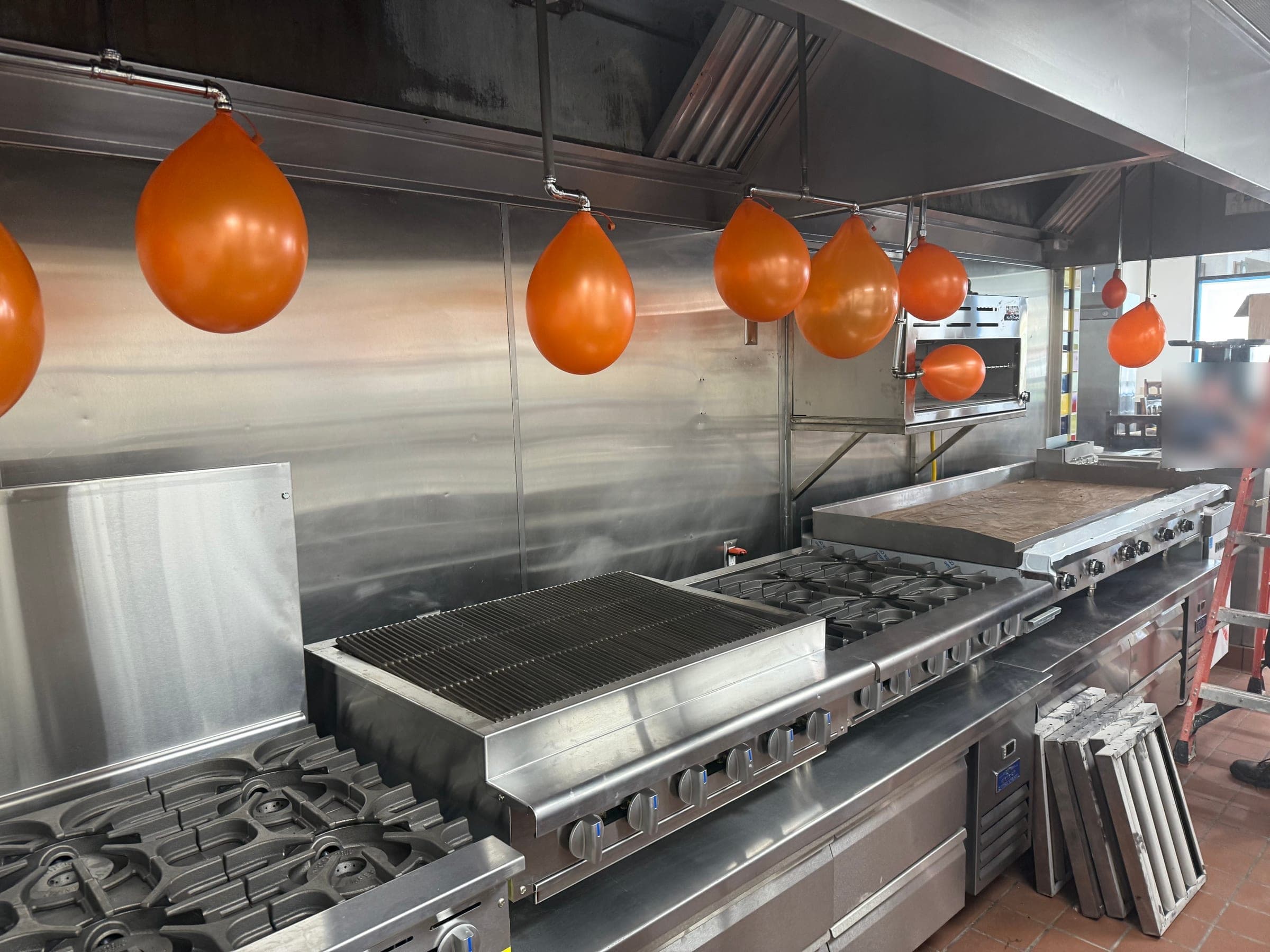
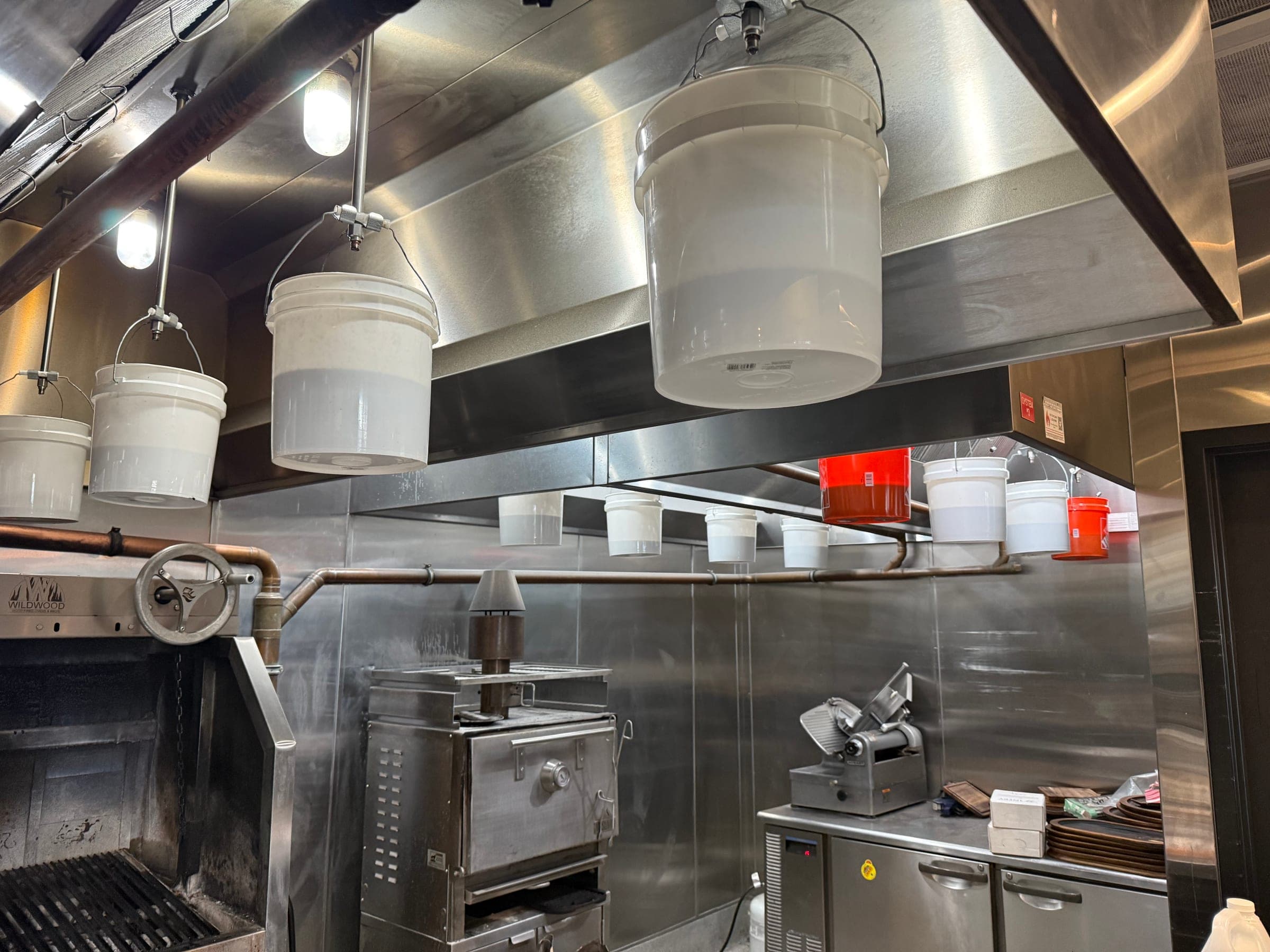
Pre-engineered plans, plan check, a 6-gallon Ansul R-102 system protecting two existing hoods, and a Fire Department balloon test passed on the first attempt.
Semi-annual service for a kitchen protected by two systems side by side, a CaptiveAire CORE and an Ansul R-102: fusible links replaced, both systems tested, tagged and documented.
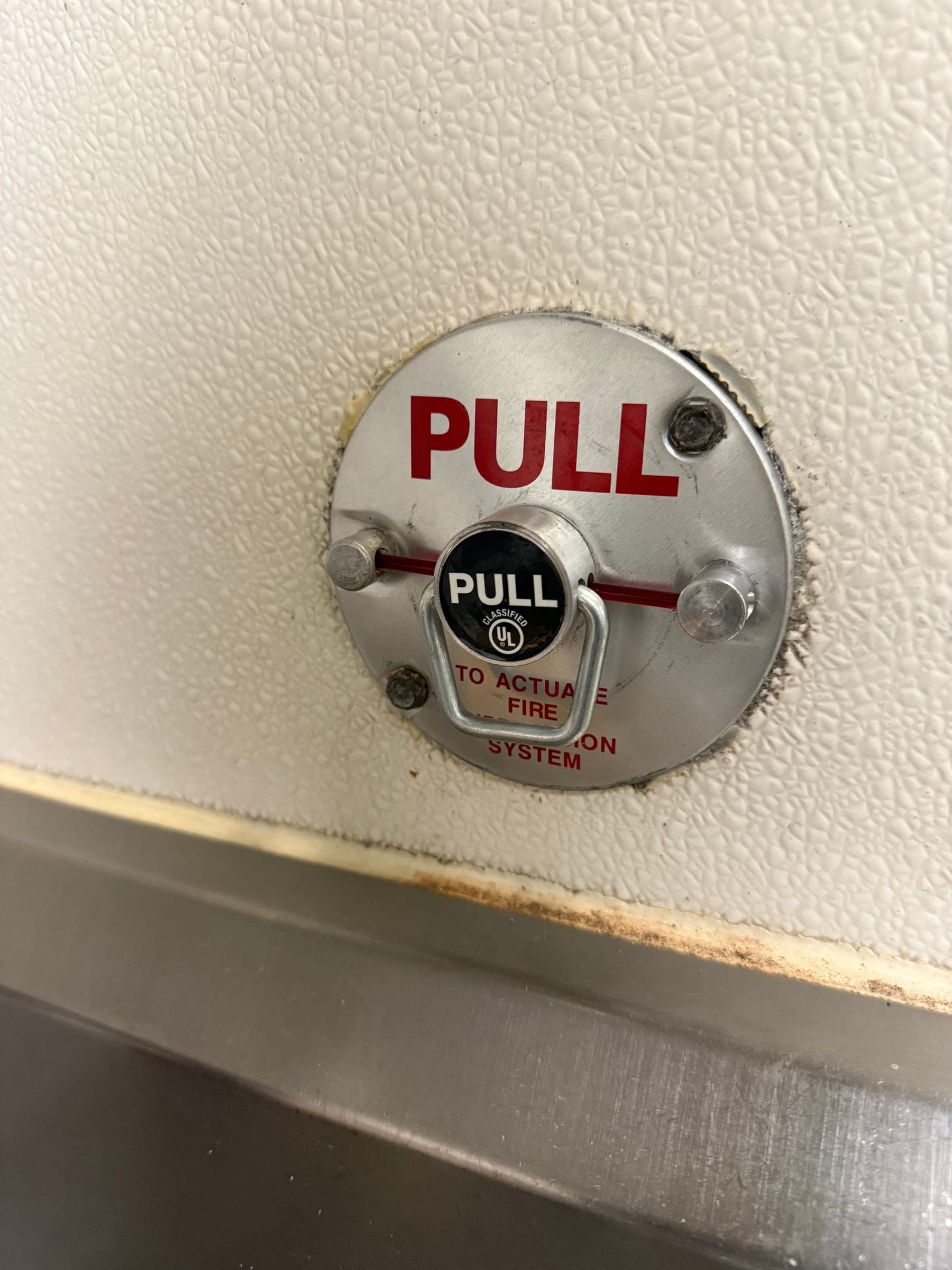
A routine inspection found the kitchen pull station rusted from behind and dragging. We replaced it with a new Ansul pull station, re-tensioned the cable and sealed it against moisture.
Semi-annual service on three Ansul R-102 systems: 17 fusible links replaced, a release part replaced, two pull-station glass panels renewed and the alarm panel connection tested.
Semi-annual service on two ventless hoods protected by Ansul R-102 systems, with grease cleaned from the release microswitches, the trip lever realigned and heat-exposed fusible links replaced.
We provide on-site service in Los Angeles, Orange, Ventura and San Bernardino counties. Share your service address and equipment details so we can confirm the work and coordinate a visit. Emergency dispatch is arranged by phone.
References on this page to LAFD or the Los Angeles Municipal Code apply to the City of Los Angeles jurisdiction. For other service addresses, we confirm the relevant fire authority and its requirements.