
Kitchen Fire Suppression

Semi-Annual System Inspection

Compliance with NFPA 96 & Title 19 for California Restaurants.

A semi-annual inspection is the service California requires for every commercial kitchen hood fire suppression system at least every six months, and after any activation. Our CSLB C-16 licensed technicians test the detection and manual release, the gas shut-off, the nozzles and the agent, replace the fusible links, tag the system and give you a written report. We serve restaurants and commercial kitchens across Los Angeles, Orange, Ventura and San Bernardino counties. For the service schedule of every part of a kitchen's fire protection, see our kitchen fire suppression overview.

Why Semi-Annual Inspections Are Required

Under the California Fire Code and NFPA 96, a commercial kitchen hood fire suppression system must be serviced at least every six months, and after any activation, by a licensed fire protection contractor (CSLB C-16).

In the City of Los Angeles, the LAFD Fire Prevention Bureau enforces these requirements, and a missed service can lead to citations.

At SOS Fire Services, we perform rigorous inspections strictly adhering to NFPA 96 standards, ensuring your system functions correctly in an emergency while fully satisfying both insurance demands and fire marshal requirements.

Every 6 Months

Required inspection frequency per NFPA 96

Documentation

Reports filed the way your fire department requires

Certified Tags

Official compliance tags for your system

Our Semi-Annual Inspection Process

  1. System Visual Inspection

    Complete visual inspection of all nozzles, fusible links, piping, and detection components.

    Read more about System Visual Inspection

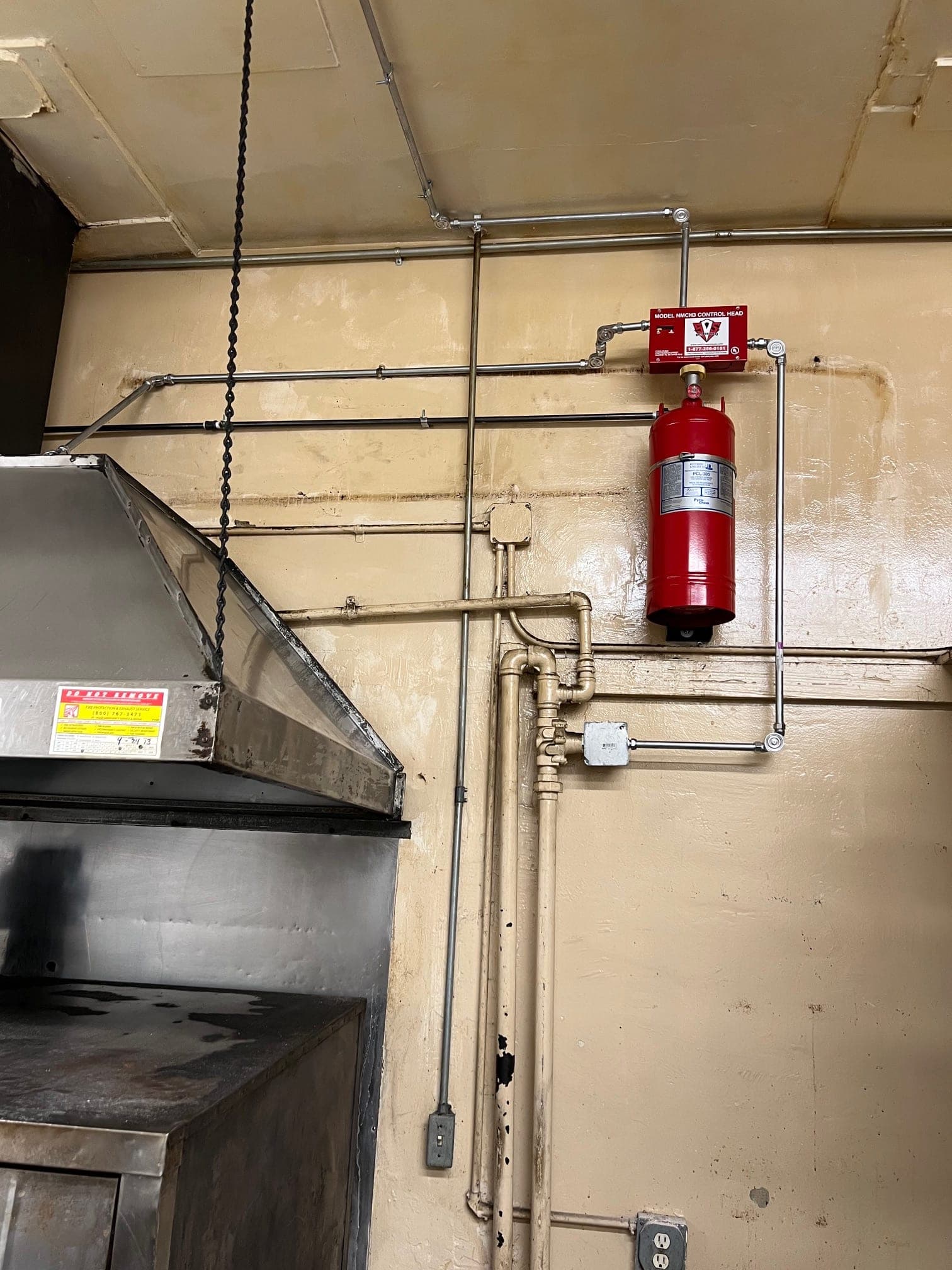
    We also check the detection line and its cable run, the manual pull station, and how the agent cylinder and releasing unit are mounted.

  2. Actuation System Check

    Test manual pull stations, automatic detection devices, and gas shutoff mechanisms.

    Read more about Actuation System Check

    We trip the system without discharging the agent and confirm that the gas valve closes, that the electrical shut-off for the cooking line works where one is fitted, and that the signal reaches the hood fans or the building's fire alarm where the system is connected to them.

  3. Agent Verification

    Check wet chemical agent levels and verify proper charge in the suppression tank.

    Read more about Agent Verification

    We check the cylinder gauge, the expellant gas cartridge and the test dates; wet chemical agent cylinders are hydrostatically tested at least every 12 years.

  4. Nozzle & Coverage Review

    Ensure all cooking equipment is properly covered and nozzles are correctly positioned.

    Read more about Nozzle & Coverage Review

    If an appliance has been moved, added or replaced since the last service, we tell you before the system is tagged, because the coverage may no longer match. See what changes require a system modification.

  5. Documentation & Tagging

    Complete inspection report, apply certification tag, and file the report the way your fire department requires.

    Read more about Documentation & Tagging

    Before we leave, the system is reset and the gas is back on, so your kitchen can cook again.

What's Included in Your Inspection

  1. Complete system functionality test
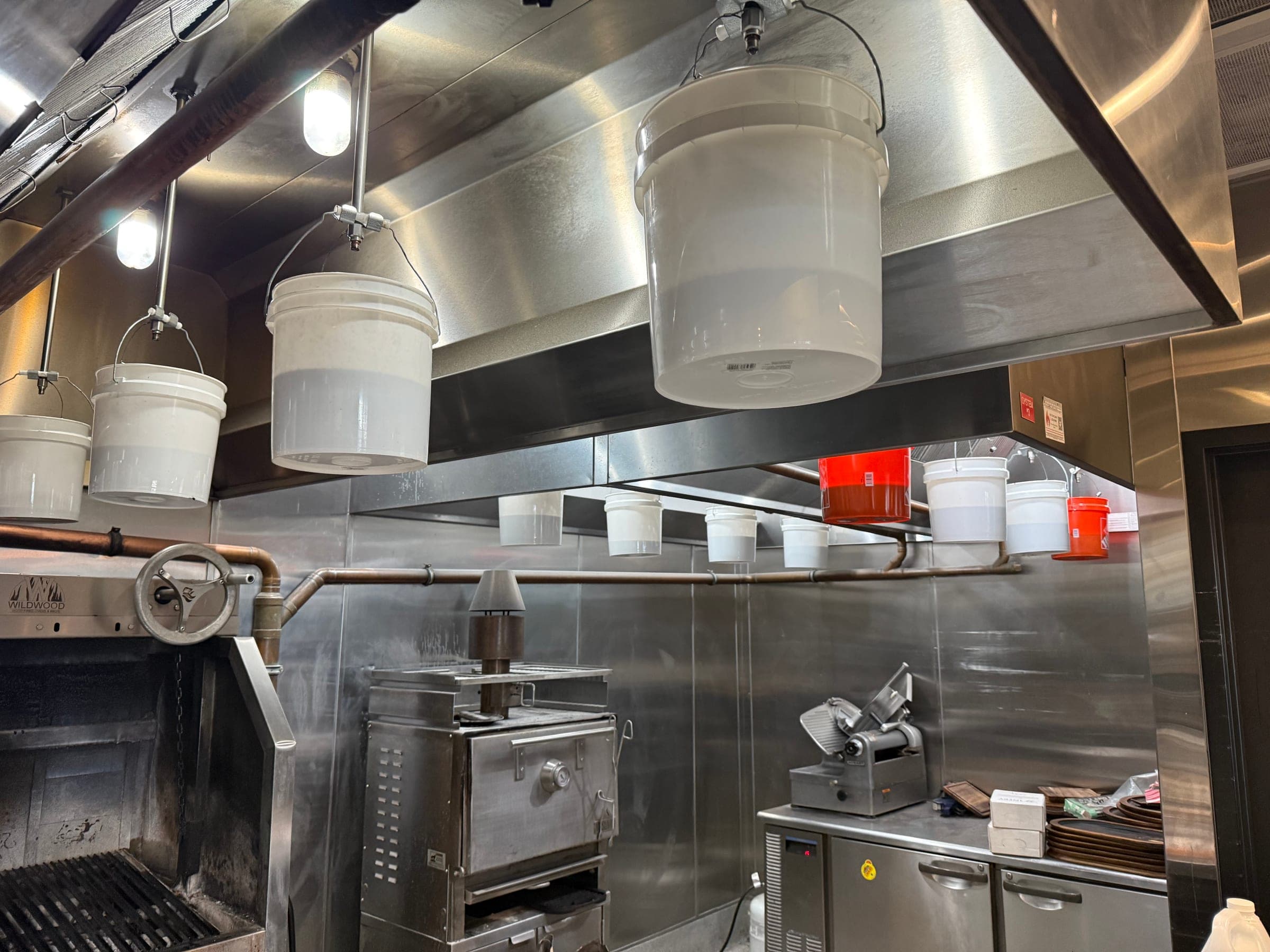
  2. Verify nozzle positioning and replace caps
  3. Check all fusible links and replace semi-annually
  4. Test manual pull station & gas shutoff valve
  5. Check cylinder pressure, agent level, and hydro dates
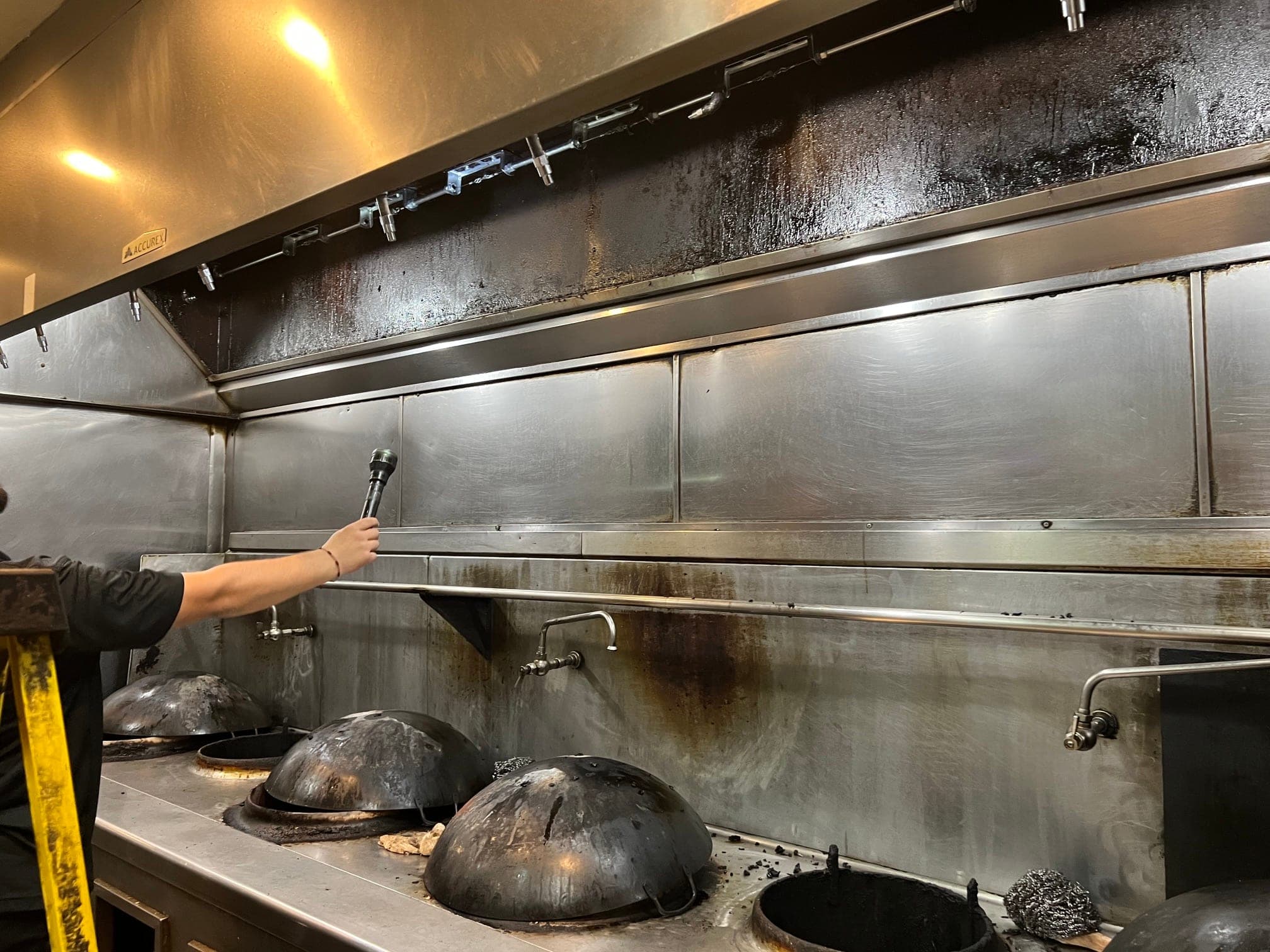
  6. Inspect piping and nozzles, including the duct and plenum nozzles, for grease buildup
  7. Verify proper hood and duct coverage
  8. Issue Certification Tag & detailed compliance report
  9. Provide Fire Marshal documentation
  10. Identify deficiencies and provide repair recommendations
  11. Date the new fusible links and destroy the removed ones
  12. Check the detection line, cable and pulleys
  13. Check mounting brackets and supports
  14. Check the cartridge and agent cylinder for damage or corrosion
  15. Test the electrical shut-off for the cooking line, where fitted
  16. Check the interlocks with the hood fans and the building fire alarm, where connected
  17. Verify compliance with current codes

Frequency Reminder

Inspections must occur every 6 months. Missing one can lead to a citation, and insurers commonly ask for current records.

How to Prepare for Your Inspection

A little preparation keeps the visit short and lets us test everything.

Tell us if any cooking appliance has been moved, added or replaced since the last service.
Keep the agent cylinder cabinet, the manual pull station and the hood clear so we can reach them.
Plan for a short stop in cooking: testing the gas shut-off turns off the gas to the cooking line.
Have your last inspection report, the current tag and any notice from the fire department at hand.
If your hood is due for cleaning, book the inspection right after it: hood cleaners can bump nozzles or coat fusible links.
We can come early in the morning or outside your service hours.

What You Receive After the Inspection

  • A dated service tag on the system.
  • A written report: what we tested, what we replaced, and any deficiency we found.
  • The report filed with your fire department the way it requires; where the department uses The Compliance Engine, we submit it there.
  • Service records you can give your insurance company, property manager or anyone else who asks for them.
  • With your permission, a reminder by email, phone or text when your next semi-annual service is due.

If the Inspection Finds a Problem

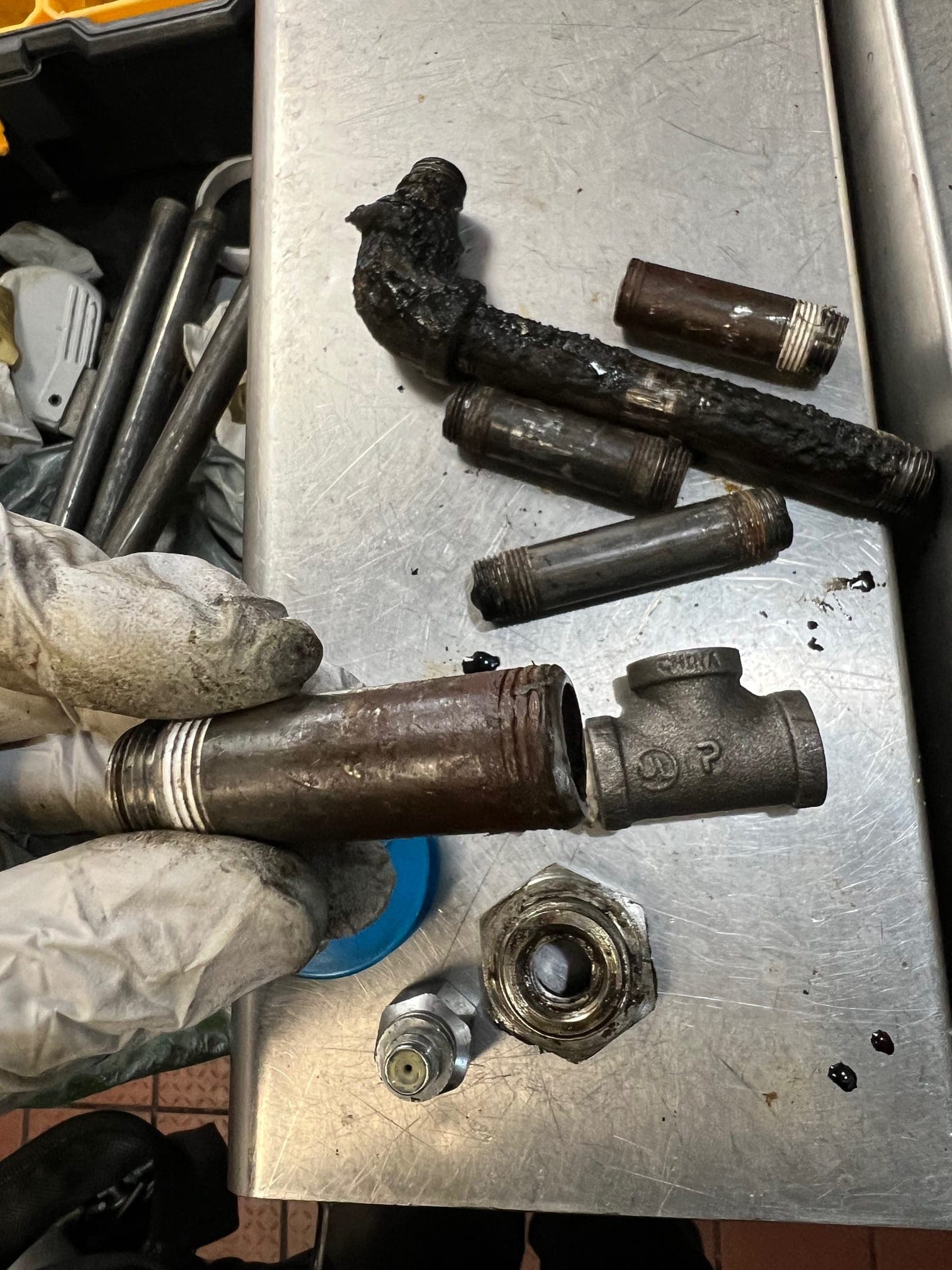
Some problems only show up when the system is tested. Two we found on recent semi-annual visits:

Every deficiency is listed in your report with a written quote for the repair, and when we have the part on the truck we can often fix it on the same visit. For larger work, see Repair & Recharge and UL 300 Upgrade. If your system has discharged or the fire department has issued a red tag, see what to do after a discharge or a red tag.

Between Inspections: Monthly Checks for Your Staff

The manufacturers' owner's guides recommend a quick check at least once a month. A manager can check that:

  • Nozzle blow-off caps are in place and not covered in grease.
  • The manual pull station is unobstructed and has not been tampered with.
  • The visual inspection seals on the releasing unit are intact.
  • Where the releasing unit has a visual indicator, it shows the system is set.
  • Where the agent cylinder has a pressure gauge, the needle is in the operable range.
  • The nozzles still point at the appliances they protect, and nothing under the hood has been moved.
  • The service tag shows a service within the last six months.

If anything looks wrong, call us. Do not adjust, bypass or reset the system yourself.

Kitchen Systems We Inspect

We inspect and service the major wet chemical kitchen systems, including systems another company installed:

  • ANSUL R-102
  • Pyro-Chem Kitchen Knight II
  • Buckeye
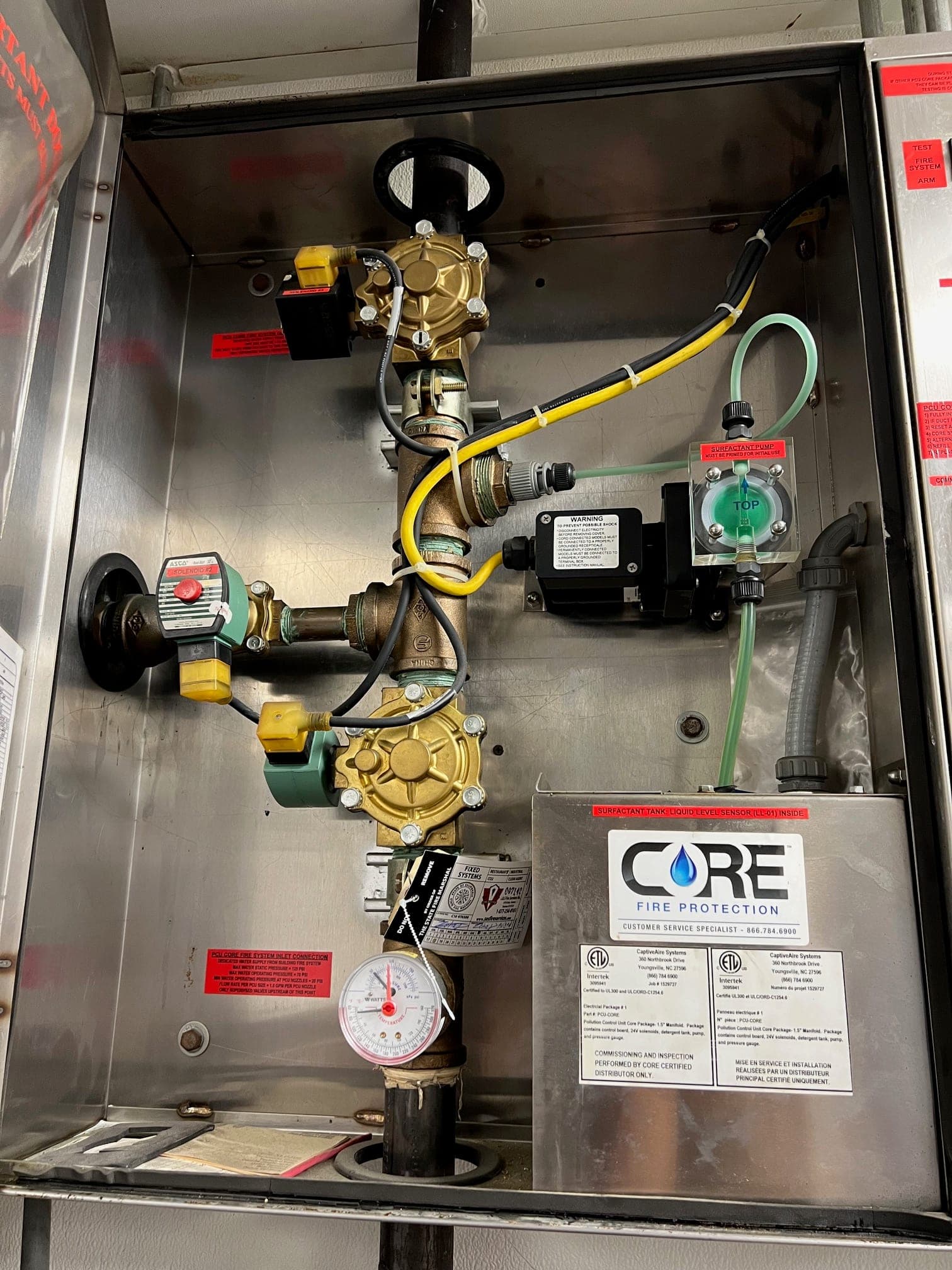
  • CaptiveAire CORE and TANK
  • ProTex II

California's fire code requires kitchen systems to comply with UL 300; an older system that does not is upgraded or replaced.

Frequently Asked Questions

How long does a semi-annual inspection take, and do we have to stop cooking?

A single hood system usually takes about 45 minutes. Cooking stops for a short time while we test the gas shut-off, and we can come early in the morning or outside your service hours.

Is your semi-annual service the same as the fire department's inspection?

No, and one does not replace the other. The semi-annual service is testing and maintenance by a licensed contractor at least every six months. Your fire department inspects the business on its own schedule and checks, among other things, that the system carries a current service tag. We can also walk your kitchen before the fire department's visit.

Can you inspect a system another company installed?

Yes. We inspect and service the kitchen systems listed on this page whoever installed them. If documents are missing or parts have been changed, we tell you what is needed before the system is tagged.

What happens if my system doesn't pass?

The report lists each deficiency and we give you a written quote. When we have the part, many repairs can be done on the same visit, and the system is tagged once it is back in working order.

How much does a semi-annual inspection cost?

It depends on how many systems and cylinders you have, how many fusible links each one uses, access, the time of the visit, and any parts that need replacing. Tell us about your kitchen and we will quote it; our article on fire suppression system costs explains the factors.

Verified reviews

What Customers Say About This Service

Overall customer rating: 5.0/5 from 151 Google and Yelp reviews.

5 star review
I called S.O.S. to do a bi-annual checkup on my annul system. Brandon and Juan came out the very next day and accomplished two things simultaneously; 1). Educated me on every aspect of this service. 2). Thoroughly examined my equipment and got everything up to speed in a couple of hours time. 3). Brandon and Juan were incredibly capable and passionate about the service they provide. 4). A follow up visit the next day by Zohar finalized the installation and he was equally great at what he does. They were the Dream Team and have earned a customer for life! Douglas Whithorne Santa Monica, CA
Read more of Douglas W.'s review
Douglas W.Apr 30, 2026
5 star review
These people have my business for life! I needed our fire suppression system and extinguishers serviced and replaced. From the initial call to the actual service, Maureen and Zohar were amazing and very knowledgeable. Their prices are definitely better than the competition that I went and quoted from and they came in the next morning! As long as I need any maintenance or service, these people have a lifelong customer. You won't regret coming to them for your needs. If I could give them 10 stars I would.
Read more of Marc M.'s review
Marc M.Apr 22, 2026
5 star review
SOS Fire Services were awesome! This was my first time dealing with commercial kitchen and SOS was sooooo helpful in getting me through the process. They went above and beyond! Thanks again!
Read more of Sally M.'s review
Sally M.Nov 13, 2025
Yelp review
Show 3 more reviews
5 star review
Great partners for our restaurant. Always transparent and honest. We are so glad we switched over. Truly thankful!
Chris PFeb 12, 2024
5 star review
SOS fire services installed my suppression system and completed all the plans and fire inspections for me. Mr. Zohar is a professional, he is courteous, and is always available to speak to you when questions arise. More importantly, they are quick to return and draw up plans. Also, he passed the inspection the first time without any issues. SOS is the only company I would consider for my next project, since I know how seamless the experience is with them from start to finish.
Read more of Aren Kurkjian's review
Aren KurkjianJan 6, 2019
5 star review
SOS fire team installed a new Hood Fire System In my buffet restaurant. they did an amazing job, very professional we will use their services for many years to come Thank you very much SOS Fire Services!!!
Read more of Fuxing D.'s review
Fuxing D.Jan 4, 2019

Read all customer reviews

Our work

Recent Kitchen Fire Suppression Projects

Jobs we completed for this service. Every card names the city where the work was done.

Show 3 more projects

See all 8 projects →

Where We Provide This Service

We provide on-site service in Los Angeles, Orange, Ventura and San Bernardino counties. Share your service address and equipment details so we can confirm the work and coordinate a visit. Emergency dispatch is arranged by phone.

References on this page to LAFD or the Los Angeles Municipal Code apply to the City of Los Angeles jurisdiction. For other service addresses, we confirm the relevant fire authority and its requirements.

Free Quote

Schedule Your Semi-Annual Inspection

California requires hood suppression systems to be inspected every six months. We file the report the way your fire department requires.

  • Response within 2 hours
  • We work around your kitchen's hours
  • CSLB C-16 licensed technicians

By submitting, you agree to our Privacy Policy. We don't sell your information. Details you send us are used to contact you about your enquiry.