Quick answer: As of October 2026, no portable fire extinguisher sold in the U.S. carries a UL rating for lithium-ion battery fires. For a small device in the earliest stage, cooling it with water or a water-based extinguisher is the approach U.S. federal guidance supports. An ABC extinguisher can knock down flames, but it will not stop thermal runaway. For an e-bike, a vehicle or a battery room, get everyone out and call 911.
Key takeaways
- Lithium-ion fires feed themselves through thermal runaway. Putting out the flames does not stop the heat, and batteries can reignite hours later.
- Class D extinguishers (Met-L-X, Lith-X) are for combustible metals, not lithium-ion batteries. Using them on a laptop or e-bike battery is a common and costly mistake.
- Cooling is the key. Water and water-based agents cool; dry chemical, CO₂ and clean agents do not.
- A new international fire class, Class L (ISO 3941:2026), now covers lithium-ion batteries, but the U.S. extinguisher standard, NFPA 10, has no Class L.
- For Southern California businesses, the bigger levers are prevention and code compliance: certified products, controlled charging areas, the 2025 California Fire Code battery-storage rules, and a trained staff.
Why lithium-ion battery fires are different
A lithium-ion cell that is damaged, overcharged, defective or overheated can enter thermal runaway: the cell heats itself faster than it can shed heat, vents flammable and toxic gases, and passes that heat to the cells next to it. The fire is not just "an electrical fire" or "a flammable-liquid fire." It is a chemical reaction inside a sealed package that keeps producing heat after the visible flames are gone.
Three things make these fires dangerous in a workplace:
- Reignition. The National Transportation Safety Board (NTSB) has warned that the "stranded" energy left in a damaged electric-vehicle battery can cause it to reignite after the fire appears to be out.
- Toxic smoke. OSHA warns that in some lithium batteries, combustion can release fluorine that forms hydrofluoric acid. Treat the smoke as hazardous, not just unpleasant.
- Violent venting. After an e-bike battery exploded during a ride on an Irvine trail in 2023, Orange County Fire Authority Division Chief Nick Freeman described the battery "sending projectiles up to 40 feet from the bike."
Lithium-ion vs. lithium metal: the distinction that decides everything
Lithium-ion batteries are the rechargeable kind found in phones, laptops, power tools, e-bikes, forklifts, EVs and energy storage systems. That includes LFP (lithium iron phosphate) batteries, which are a lithium-ion chemistry, not lithium metal. Under the federal definition, lithium-ion cells have no metallic lithium in either electrode.
Lithium-metal batteries are mostly non-rechargeable (primary) cells, such as some coin cells and specialty industrial, medical or military batteries. A burning lithium-metal cell is a true combustible-metal (Class D) fire and reacts dangerously with water.
Which extinguishing agents work on lithium-ion batteries?
The table below summarizes what the evidence and the manufacturers' own data say about each agent.
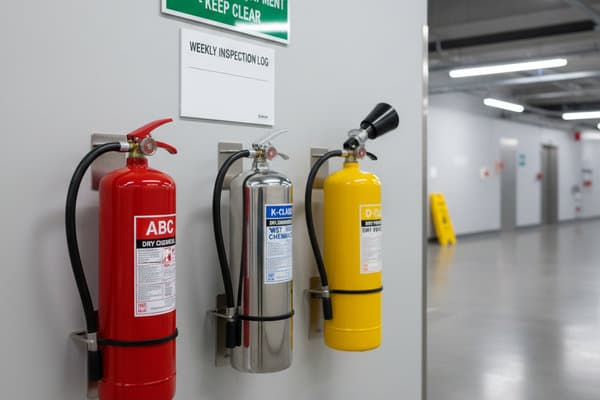
| Agent | Li-ion battery | Lithium metal | What to know |
|---|---|---|---|
| Agent Water / water mist | Li-ion battery Best available for cooling | Lithium metal Never | What to know Cools the cells and slows spread to neighboring cells. The FAA's 2025 safety alert for airlines calls large amounts of water the primary response to a battery in thermal runaway. |
| Agent AVD (aqueous vermiculite dispersion) | Li-ion battery Early-stage, small devices only | Lithium metal No | What to know Water-based, so it cools. The UL listings we could find are for ordinary-combustible (Class A) fires. |
| Agent Water-based wetting agent / encapsulator (e.g., F-500 EA) | Li-ion battery Cools; evidence mostly from manufacturer testing | Lithium metal No | What to know UL-classified as a wetting agent for Class A and B fires. That is not a lithium-ion extinguisher rating. UL FSRI's 2026 EV fire research recommends plain water from a hose line and says added suppression agents are not required. |
| Agent ABC dry chemical | Li-ion battery Knocks down flames only | Lithium metal No | What to know Useful for burning materials around the battery. Does not cool, so expect reignition. |
| Agent BC / Purple-K dry chemical | Li-ion battery Knocks down flames only | Lithium metal No | What to know Purple-K is potassium bicarbonate. It is electrically nonconductive and rated B:C. |
| Agent CO₂ | Li-ion battery Very limited | Lithium metal No | What to know Displaces oxygen briefly, provides no lasting cooling and has short range. |
| Agent Clean agent (e.g., FK-5-1-12, HFC-227ea) | Li-ion battery Flame knockdown only | Lithium metal No | What to know Right for protecting server rooms and electronics from ordinary fires. The FAA notes that gaseous agents can briefly suppress flames but do not halt thermal runaway. |
| Agent Class D – Met-L-X (sodium chloride base) | Li-ion battery No | Lithium metal Not for lithium | What to know UL-listed for sodium, potassium, sodium-potassium alloy and magnesium. Not lithium. |
| Agent Class D – Lith-X (graphite) / copper powder | Li-ion battery No | Lithium metal Yes | What to know Developed for lithium-metal fires. Ansul's Lith-X extinguishers carry no UL rating ("N/A" on the data sheet). |
| Agent Fire blankets | Li-ion battery Small devices: isolation only | Lithium metal Limited | What to know NFPA's Fire Protection Research Foundation and UL FSRI warned in May 2025 that EV fire blankets can trap flammable battery gases and create an explosion risk. |
For the basics of extinguisher classes, see our guide to fire extinguisher classes A, B, C, D and K.
Is there a UL-listed lithium-ion fire extinguisher?
No, not in the U.S. as of October 2026. Amerex, one of the largest U.S. extinguisher manufacturers, wrote in 2024 that neither UL nor NFPA "has put out a standard around lithium-ion battery fire extinguishers." In 2023, the NFPA technical committee responsible for NFPA 312 noted there was "presently no Class-L (lithium-ion battery) classification for portable fire extinguishers in NFPA 10."
You may still see "Class L" in product listings. It comes from ISO 3941:2026, an international classification of fires published in January 2026, which added Class L for lithium-ion batteries. It is not part of NFPA 10, and it is a classification of fires, not a rating for extinguishers.
Buyer beware: If a product is marketed as a "lithium battery extinguisher," check what it is actually listed for. In most cases the UL listing covers ordinary combustibles (Class A), and any lithium-ion claim rests on the manufacturer's own testing.
What to do: response by scenario
Your first priority is always people, not the battery. Only fight a fire if it is small, you are trained, you have a clear exit, and someone is already calling 911.
| Scenario | Recommended response |
|---|---|
| Scenario Phone, laptop, tablet or small tool battery (early stage) | Recommended response If safe, disconnect the charger. Alert others and call 911. Cool the device with a water-based extinguisher or water. Do not pick up a swelling, hissing or smoking battery. Expect it may flare again; keep watching and let the fire department confirm it is out. |
| Scenario E-bike, e-scooter or large tool battery | Recommended response Evacuate the room, close the door behind you and call 911. These packs can burn violently and eject debris. Do not stay to fight the fire. |
| Scenario Forklift or equipment charging area, warehouse | Recommended response Activate the alarm, evacuate per your emergency plan and call 911. Shut off charging power only if it can be done safely from outside the hazard area. |
| Scenario EV in a garage or loading dock | Recommended response Evacuate and call 911. Firefighters typically use large, sustained volumes of water. Do not attempt to use a fire blanket on an EV. |
| Scenario Energy storage system (ESS / BESS) | Recommended response Follow the site's emergency response plan, evacuate and call 911. Evacuation distances and duration are set by the fire department, not by a fixed rule. |
After any battery fire: damaged batteries can reignite. Isolate them outdoors, away from buildings and combustibles, in a non-combustible container, and arrange disposal as hazardous waste through a certified recycler. Have every extinguisher that was used recharged or replaced before you return the area to service.
Lessons from Southern California battery fires
Recent incidents in our region show how these fires behave at scale:
- Gateway Energy Storage, Otay Mesa (San Diego County), May 15, 2024. A fire in a 250 MW battery facility reignited repeatedly and was still active days later. Nearby businesses received evacuation warnings and orders, and a nearby state prison was told to shelter in place.
- SDG&E battery storage yard, Escondido, September 5, 2024. A fire in one of 24 battery containers prompted mandatory evacuations and closed nearby schools. SDG&E said industry practice is to let such fires burn out on their own when that can be done safely, which "could take up to 48 hours."
- I-15 near Baker (San Bernardino County), July 26, 2024. A truck carrying a container of six industrial-size lithium batteries overturned and caught fire. The interstate, the main route between Southern California and Las Vegas, was closed northbound for nearly two days.
- Moss Landing (Monterey County), January 16, 2025. One of the world's largest battery storage facilities burned, about 1,200 to 1,500 people were evacuated, and the site flared up again on February 18, 2025. EPA-supervised cleanup was still under way in late 2026, with battery removal and demolition expected to finish in mid-2027.
The common thread: once a large lithium-ion system is in thermal runaway, firefighters manage it with distance, cooling and time. A business's real control is before the fire, through prevention, detection, planning and compliance.
What California code requires in 2026
2025 California Fire Code: battery storage (Section 320)
The 2025 California Fire Code took effect on January 1, 2026. Its Section 320 adopts the 2024 International Fire Code's lithium battery storage rules, with California amendments. Key points for businesses:
- A permit is required to accumulate more than 15 cubic feet of lithium-ion or lithium-metal batteries.
- A fire safety plan must include emergency response actions for a fire involving the battery storage.
- Indoor storage areas above the limited-storage threshold need a technical opinion and report approved by the fire code official, 2-hour fire-rated separation in buildings with other uses, automatic sprinklers (or an approved alternative system) and air-aspirating or radiant-energy fire detection. Some of these are relaxed for batteries kept at 30 percent state of charge or less.
- Outdoor storage areas are capped at 900 sq ft and 10 ft high, and generally kept at least 20 ft from buildings, lot lines and public ways.
- Exceptions include batteries installed in or packed with the equipment they power, and batteries in original retail packaging rated at 300 Wh or less (lithium-ion) or containing 25 grams of lithium metal or less.
Cities and counties can amend the code. Confirm the requirements with your local fire authority: LAFD, LA County Fire, OCFA, Ventura County Fire or San Bernardino County Fire, depending on your location.
Energy storage systems: NFPA 855
Stationary battery systems fall under the fire code's energy-systems chapter and NFPA 855. The 2026 edition of NFPA 855 makes a hazard mitigation analysis the default and adds large-scale fire testing and emergency response planning requirements. Your fire department decides which edition applies to your project.
E-bikes and e-scooters: SB 1271
Since January 1, 2026, California law (SB 1271) prohibits selling, leasing or distributing an e-bike unless its battery has been tested by an accredited laboratory to UL 2849 or EN 15194. Similar rules cover e-scooters and other powered mobility devices (UL 2272) and replacement batteries (UL 2271). Rental operators must comply starting in 2028. For employers, the practical rule is simple: allow only certified e-bikes and batteries to be charged on your property.
Fire extinguishers: Cal/OSHA, NFPA 10 and the State Fire Marshal
- Cal/OSHA (Title 8, §6151): annual maintenance with the date recorded; travel distance of 75 ft or less to an extinguisher for Class A hazards and 50 ft or less for Class B; and extinguisher training at hire and at least annually.
- NFPA 10: monthly inspections (electronic monitoring is an accepted alternative), annual maintenance, six-year internal maintenance for stored-pressure dry-chemical units, and hydrostatic testing every 12 years for most dry-chemical units and every 5 years for CO₂ and water units. Rechargeable extinguishers that pass these tests have no fixed replacement date; disposable (non-rechargeable) units must be retired 12 years after manufacture.
- California State Fire Marshal: companies that service extinguishers need a State Fire Marshal license, and every technician needs a Certificate of Registration.
A lithium-ion safety checklist for commercial facilities
- Allow only certified products (UL 2849 for e-bikes, UL 2272 for e-scooters and other personal e-mobility devices, UL 2271 for light EV batteries). Keep counterfeit and damaged batteries off site.
- Create a designated charging area away from exits, stairwells and combustible storage. Do not charge e-bikes or scooters in hallways or near exits.
- Do not charge unattended overnight unless the area is designed for it, with detection and separation.
- Quarantine damaged, swollen or dropped batteries in a non-combustible container, outdoors if possible, until disposal.
- Check your storage quantities. If you accumulate more than 15 cubic feet of lithium batteries, you need a permit under the 2025 California Fire Code. Keep stored batteries at a low state of charge where possible. Insurers such as FM publish detailed guidance (Data Sheet 7-112, Lithium-Ion Battery Manufacturing and Storage).
- Match extinguishers to the surrounding hazards. Most charging areas also contain ordinary combustibles, so a properly placed, properly maintained extinguisher still matters, even though it won't stop a battery in thermal runaway.
- Train your team on when to fight a fire and when to leave. Make the "evacuate and call 911" rule for e-bikes, EVs and battery rooms part of your fire safety plan.
- Coordinate with your fire authority, your insurer and your sprinkler and alarm contractors on sprinklers and detection for battery storage and charging areas.
How SOS Fire Services can help
SOS Fire Services is a CSLB-licensed C-16 fire protection contractor (license #976500), licensed by the California State Fire Marshal (#E2390), based in Northridge and serving businesses across Los Angeles, Orange, Ventura and San Bernardino counties. For facilities that store or charge lithium-ion batteries, we can:
- Review extinguisher selection, quantity and placement for charging areas and surrounding hazards, under NFPA 10 and Cal/OSHA, as part of our consulting and compliance service.
- Perform annual inspection and tagging, hydrostatic testing, and recharge or replacement after any discharge.
- Train your staff on extinguisher use and on when not to fight a battery fire.
- Support server rooms with clean agent fire suppression systems, and help you prepare for fire inspections or correct fire code violations.
Not sure your facility is ready for a lithium-ion battery incident? Call SOS Fire Services 24/7 at (877) 256-0161 or request a quote for an on-site extinguisher and compliance review.
Frequently asked questions
Can I use a Class D extinguisher on a lithium-ion battery fire?
No. Class D agents such as Met-L-X and Lith-X are designed for combustible metals, including lithium metal. Lithium-ion batteries contain no metallic lithium, and Met-L-X is not listed for lithium at all.
Can you put water on a lithium-ion battery fire?
Yes. Water is usually the most effective option for lithium-ion batteries because it cools the cells and slows the spread of thermal runaway. Never use water on a lithium-metal battery fire. Disconnect power first if it is safe to do so.
Will an ABC fire extinguisher put out a lithium battery fire?
An ABC extinguisher can knock down flames and put out burning materials around the battery, but it does not cool the cells. The battery can keep heating and reignite. Call 911 even if the flames go out.
Is there a UL-listed lithium-ion fire extinguisher?
Not in the U.S. as of October 2026. Neither UL nor NFPA 10 has a lithium-ion extinguisher rating. Products marketed for lithium-ion fires are usually UL-listed for Class A fires only.
What is a Class L fire?
Class L is a new fire class created by ISO 3941:2026 for fires involving lithium-ion batteries. It is used internationally, but the U.S. extinguisher standard, NFPA 10, has no Class L, and no portable extinguisher in the U.S. carries a Class L rating.
Do I need a permit to store lithium-ion batteries in California?
Under the 2025 California Fire Code, a permit is required to accumulate more than 15 cubic feet of lithium-ion or lithium-metal batteries. Batteries installed in or packed with the equipment they power are exempt, as are lithium-ion batteries of 300 Wh or less in original retail packaging. Check local amendments with your fire department.
Are fire blankets safe for lithium-ion battery fires?
They can help isolate a small device, but they do not stop thermal runaway. For electric vehicles, NFPA's Fire Protection Research Foundation and UL FSRI warned in 2025 that blankets can trap flammable gases and create an explosion risk.
Sources
- Lithium-Ion Battery Fire Extinguishers: The Search for a Solution (Amerex, 2024)
- NFPA 312 committee responses to public input (NFPA, 2023)
- SAFO 25002: Managing the Risks of Lithium Batteries Carried by Passengers and Crewmembers (FAA, 2025)
- Potential hazard involving EV fire blankets (UL FSRI and NFPA's Fire Protection Research Foundation, 2025)
- Evidence-based EV battery fire response considerations (UL FSRI, 2026)
- Risks to emergency responders from lithium-ion battery fires in electric vehicles (NTSB, 2021)
- Safety and Health Information Bulletin: lithium batteries (OSHA, 2019)
- Orange County firefighters report increase in e-bike fires (CBS Los Angeles, 2023)
- Fire at SDG&E battery storage facility in Escondido prompts evacuations (KPBS, 2024)
- I-15 reopens after lithium battery truck fire (Caltrans, 2024)
- EPA begins final phase of post-fire battery cleanup at Moss Landing (U.S. EPA, 2026)
- 2025 California Fire Code, Chapter 3, Section 320 Battery Storage (ICC)
- SB 1271, Electric bicycles, powered mobility devices, and storage batteries (California Legislature, 2024)
- Title 8, §6151, Portable Fire Extinguishers (Cal/OSHA)