Plenty of building owners assume a fire extinguisher has to live in a cabinet, and plenty of product pages let them think so. It doesn't. California accepts a plain wall bracket. A cabinet is sometimes the better choice, and in a few spots the rules push you toward one type of housing over another. Here's how to decide.
The short answer
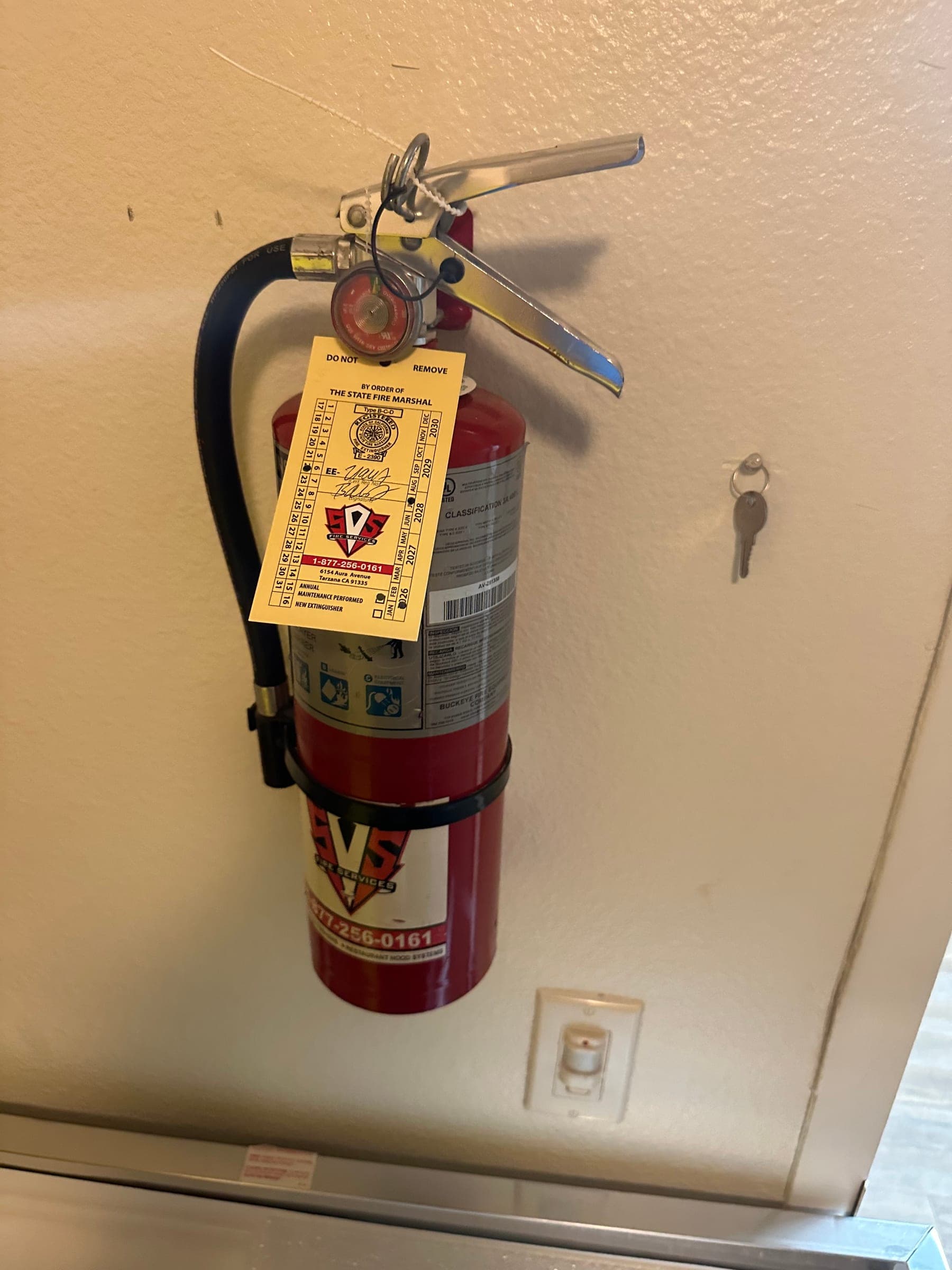
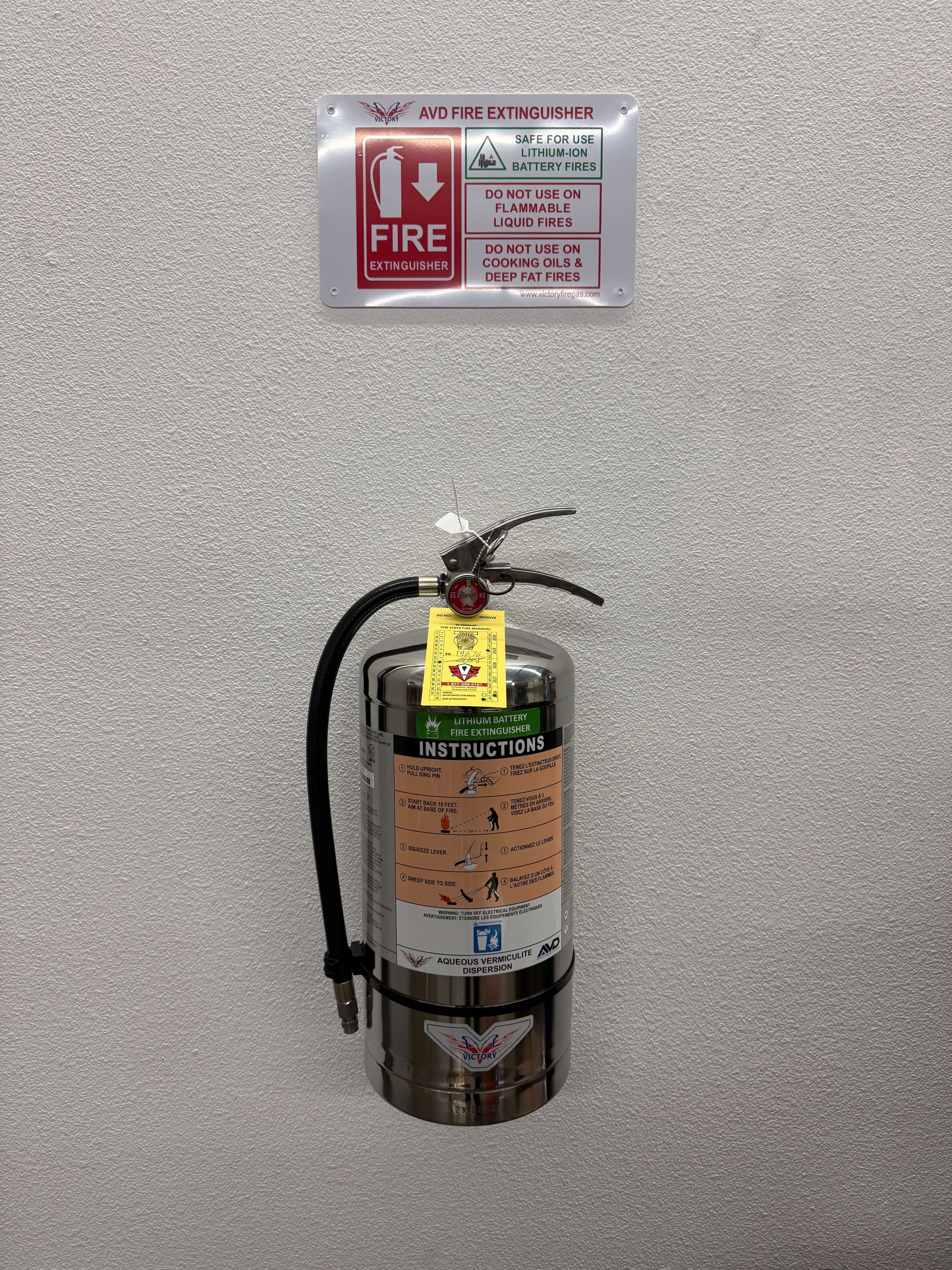
California doesn't require a cabinet. Title 19 says a portable extinguisher must be securely installed on its hanger, in its bracket, or placed in a cabinet or wall recess. A hanger or bracket has to be anchored properly, following the manufacturer's instructions.
We found no rule in Title 19 or the California Fire Code that requires a cabinet just because a unit is outdoors or in a parking garage. Local inspectors can still ask for one, and we've seen them require a cabinet in a garage or outdoors. Your fire authority has the final word, so check before you buy.
What the rules do care about:
- Height. The top of the extinguisher can't be more than 5 feet above the floor (3½ feet if it weighs more than 40 pounds), and the bottom must stay at least 4 inches up. A cabinet doesn't change that.
- Visibility. It can't be blocked or hidden from view, and it belongs along normal paths of travel.
- Protection. If it can get hit, shaken or knocked loose, it needs to be protected.
One common mix-up: OSHA's online guide talks about where the carrying handle sits, but that's guidance. California's rule measures to the top of the extinguisher.
Bracket or cabinet: where each one fits
| Location | Usually the right choice | Why |
|---|---|---|
| Location Back of house, shop or storeroom, out of the walkway | Usually the right choice Bracket | Why Secure, visible and easy to grab |
| Location Corridor, lobby or stairwell | Usually the right choice Semi-recessed or recessed cabinet | Why Anything sticking out more than 4 inches can be a problem in a walkway |
| Location Parking garage or loading dock | Usually the right choice Cabinet | Why Exposed to vehicle impact |
| Location Outdoors | Usually the right choice Cabinet or weather cover | Why Sun and weather; watch the heat |
| Location Apartment or public area with tampering | Usually the right choice Cabinet | Why Harder to bump, steal or misuse |
| Location Fire-rated wall | Usually the right choice Surface-mount cabinet, bracket, or fire-rated cabinet | Why Don't cut into the wall's rating |
| Location Truck, van or forklift | Usually the right choice Strap-type vehicle bracket | Why Road vibration |
The table is our practical advice, and the sections below give the rules behind it.
When a bracket is enough
A bracket is fine wherever the extinguisher is out of harm's way and out of the walkway. Three things make it work:
- Use the bracket made for that extinguisher. Title 19 refers to the hanger or bracket supplied with it, and a hanger for a 5-pound unit shouldn't hold a 10-pound one. Skip the homemade hooks.
- Anchor it to something solid. Follow the bracket maker's instructions.
- Face the instructions outward, so anyone grabbing it can read them.
If the unit keeps getting knocked off, that's a sign. Title 19 requires a bracket designed for that problem wherever an extinguisher can be dislodged.
When a cabinet is the better choice
- It gets bumped. Carts, forklifts, cars and busy hallways are the usual reasons. Title 19 says an extinguisher exposed to impact, vibration or the environment must be adequately protected. A cabinet is one way to do that, and it's what we recommend most often for parking garages.
- It's exposed to weather or corrosion. Outdoor and coastal units take a beating. Extinguishers in spots like these also need closer attention during monthly checks.
- It gets tampered with. A cabinet makes theft and casual misuse harder. Some can be monitored with a switch and a local alarm.
- It's in a walkway. See the next section.
Walkways and the 4-inch rule
In a walkway, anything with a leading edge between 27 and 80 inches above the floor can stick out no more than 4 inches. Most surface cabinets stick out further, which is why corridors usually call for a recessed or semi-recessed cabinet. Our Fire Extinguisher Cabinets page covers this rule along with fire-rated walls, locks and hot locations.
Two things that page doesn't spell out:
- Height and projection are separate rules. An extinguisher at the right height can still stick out too far.
- Outside the walkway, the limit doesn't apply. The rule covers circulation paths. An object with its leading edge at 27 inches or lower can also project further, as long as it doesn't narrow the accessible route. If a tight corridor has you weighing that, involve your architect or an accessibility specialist first.
If you do choose a cabinet
- Pick the extinguisher first. The cabinet has to fit it, with room to lift it out easily.
- Don't lock it without approval. California doesn't allow locked cabinets unless the extinguisher is subject to malicious use, the cabinet has emergency access and your fire authority approves.
- Make sure people can find it. If the extinguisher can't be seen, a sign has to show where it is.
- Keep the breaker tool with a break-glass door. A cabinet with a break-front panel needs its bar or hammer, and a missing one gets replaced.
- Think about heat. Closed cabinets in hot spots need screened openings and drains, and an extinguisher has to stay inside the temperature range on its label.
- Check the wall. Recessed cabinets go into a wall opening. On a fire-rated wall, that usually means a fire-rated cabinet. Your architect or fire authority can confirm which walls are rated.
Extinguisher brackets for trucks and vehicles
A wall hook won't hold up on the road. NFPA 10 calls for strap-type brackets designed for vehicles, and we install them on trucks, vans and forklifts. The laws focus on the result: the extinguisher must be securely mounted so it can't slide, roll or move vertically, and it has to be readily accessible.
Size depends on the vehicle:
- Federal rule for commercial motor vehicles: one 5 B:C unit, or two 4 B:C units. Placarded hazmat needs 10 B:C.
- California motor carrier rule: at least one 4B:C unit, with some exceptions for vehicles that stay in a small local area.
- Cal/OSHA: any truck or bus used mainly to transport employees carries one.
Check which rules apply to your fleet. Food trucks also need a fire suppression system of their own; see our food truck page.
Frequently asked questions
Do fire extinguishers have to be in a cabinet?
No. California allows a hanger, bracket, cabinet or wall recess. A local inspector can still require a cabinet in a spot like a garage.
What height should a fire extinguisher be mounted?
The top no more than 5 feet above the floor, or 3½ feet if it weighs more than 40 pounds. The bottom at least 4 inches above the floor. See our Fire Extinguisher Services page for the placement rules.
Can a fire extinguisher sit on the floor?
Not as a permanent spot. Portable units must be mounted, with the bottom at least 4 inches off the floor. Wheeled units are the exception and go in a designated location. Where an extinguisher is only needed for a while, NFPA 10's notes suggest a portable stand built to meet the mounting heights.
Are cabinets required outdoors?
We found no California rule that says so. The requirement is protection from damage, and a cabinet or weather cover is the usual way to get it. Inspectors sometimes require a cabinet anyway, so check with your fire authority.
Does a fire extinguisher in a cabinet still need its monthly check?
Yes. The cabinet changes where it lives, not its monthly check or annual service. Our guide to reading your fire extinguisher tag explains what to look for.
Brackets and cabinets from SOS Fire Services
SOS Fire Services sells Potter Roemer cabinets in surface-mount, semi-recessed and fully recessed models, and we also sell listed fire-rated cabinets. We install surface-mount cabinets on drywall over studs, block or concrete. Recessed cabinets go into a wall opening, so your contractor installs those. We install wall brackets, hangers and vehicle brackets too, and service the extinguishers themselves under State Fire Marshal license #E2390. For one recent job, we fitted cabinets throughout a multi-story apartment building in South Los Angeles.
Call (877) 256-0161 or see Fire Extinguisher Cabinets & Accessories. For new extinguishers, see Sales & Installation.
Sources
- Cal. Code Regs. tit. 19, § 567: Distribution of fire extinguishers
- Cal. Code Regs. tit. 19, § 567.2: Cabinets
- Cal. Code Regs. tit. 19, § 567.3: Installation
- Cal. Code Regs. tit. 19, § 567.4: Dislodgment
- Cal. Code Regs. tit. 19, § 567.5: Physical damage protection
- Cal. Code Regs. tit. 19, § 567.6: Mounting
- Cal. Code Regs. tit. 19, § 567.7: Sealed cabinets
- Cal. Code Regs. tit. 19, § 574.2: Inspection procedures
- California Fire Code 2025, Chapter 9: Fire Protection and Life Safety Systems
- 2010 ADA Standards for Accessible Design (U.S. Access Board)
- Guide to the ADA Accessibility Standards: Protruding Objects (U.S. Access Board)
- OSHA eTool: Extinguisher Placement and Spacing
- 49 CFR § 393.95: Emergency equipment on all power units
- Cal. Code Regs. tit. 13, § 1242: Fire extinguishers
- Cal. Code Regs. tit. 8, § 3702: Transporting employees
- NFPA 10 Second Draft Report