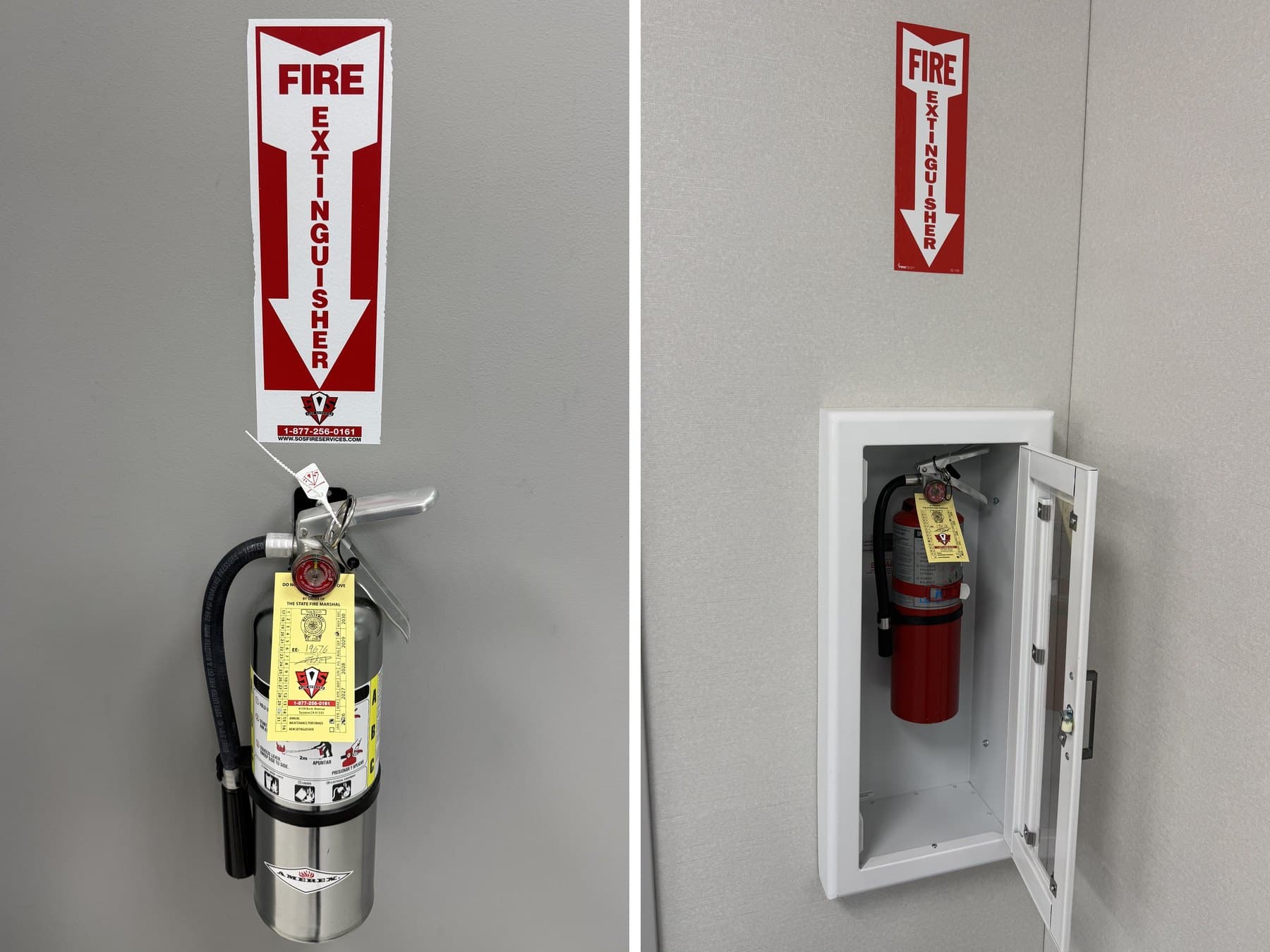
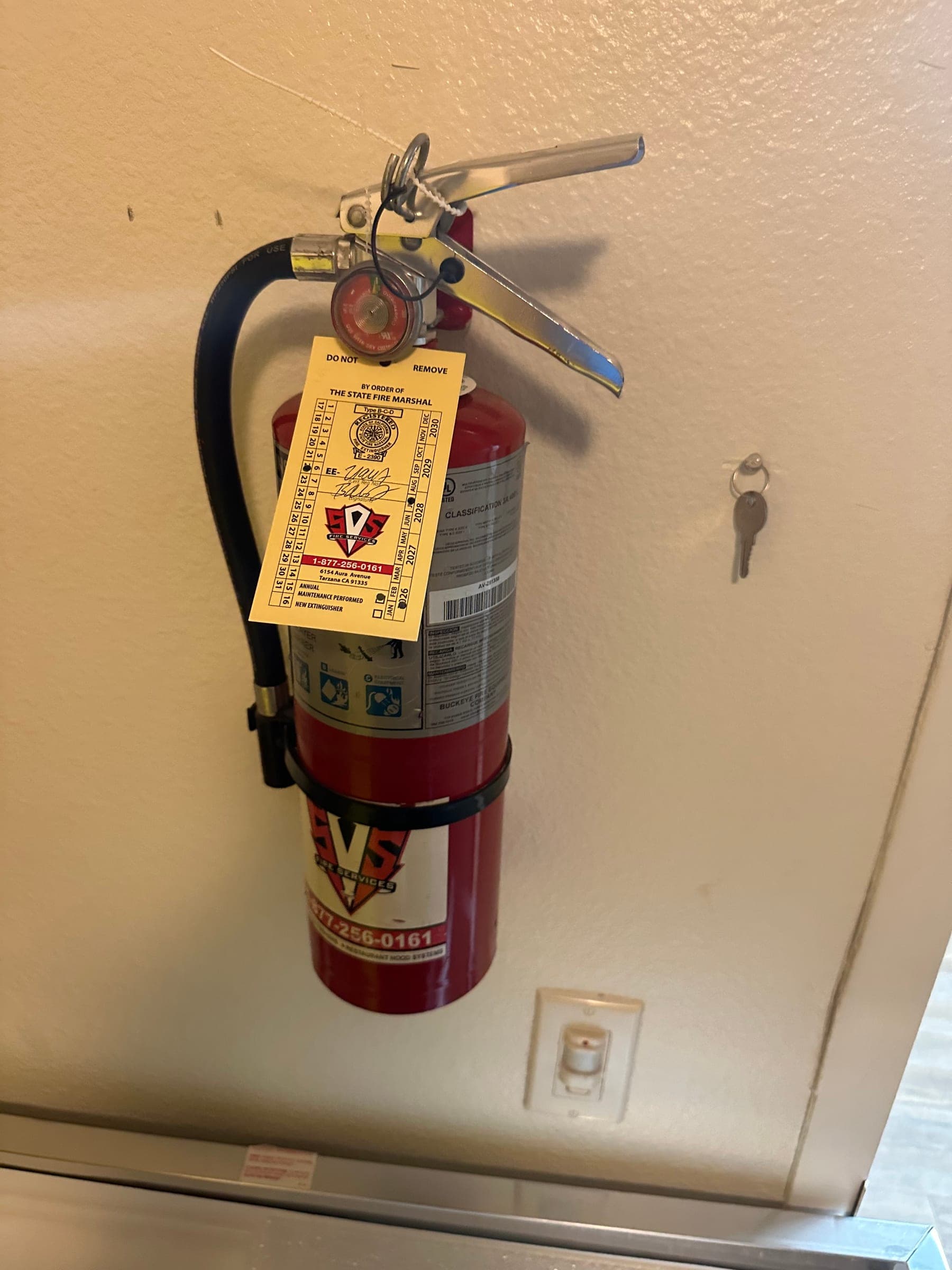
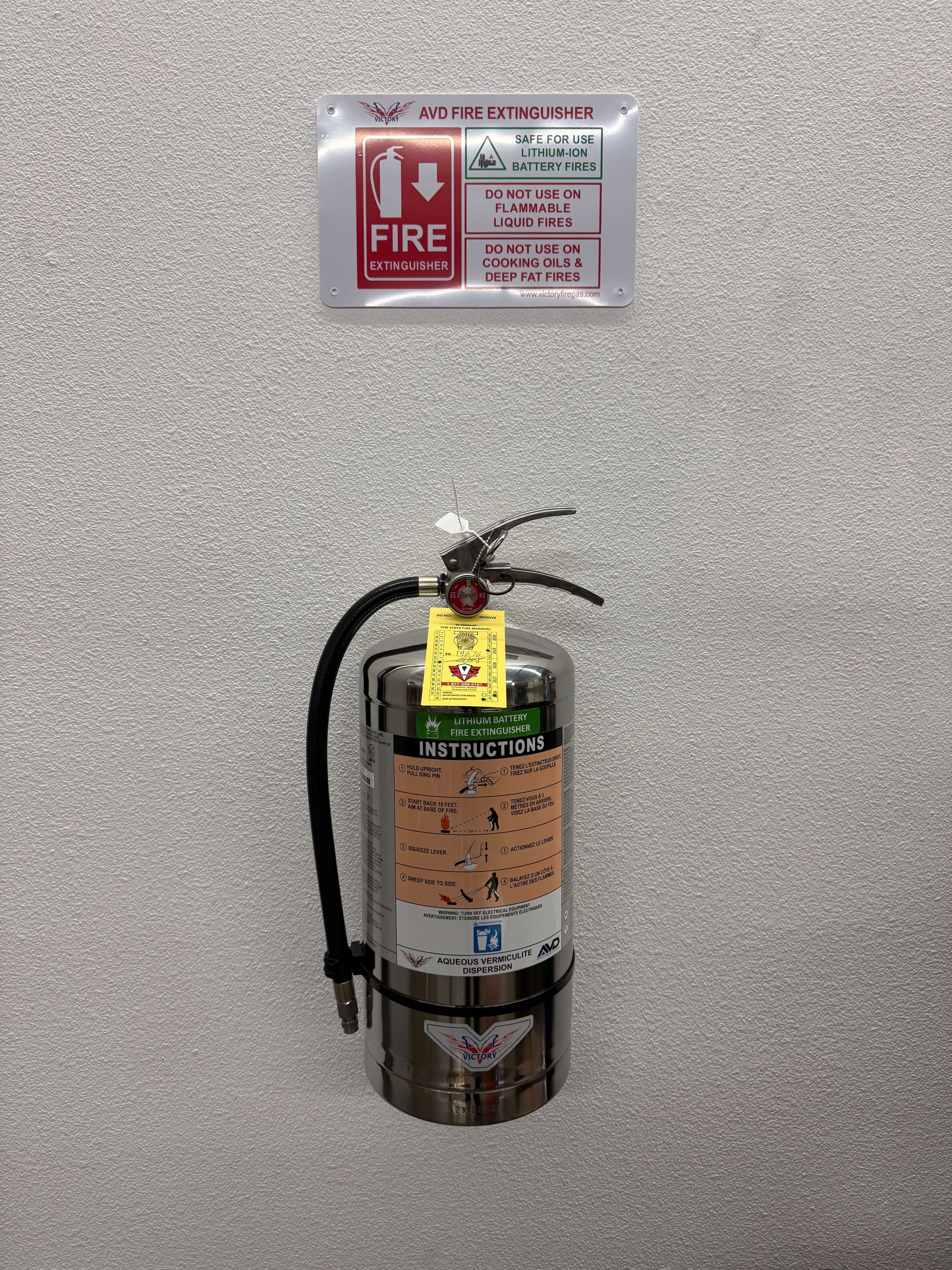
The holidays bring more orders, new hires, extra equipment and cases of stock stacked wherever they fit. Any of those can quietly undo a fire extinguisher setup that passed fine in the summer. In a busy season, the problems we find most often are blocked extinguishers, expired tags and staff who don't know where the pull station is. Walk your kitchen with this list before the rush. Most of it needs nothing but your eyes.
The short version
If your kitchen cooks with vegetable or animal oils and fats, you need a Class K extinguisher within 30 feet of the cooking equipment, as the backup to your hood suppression system. It needs a placard beside it, a current annual tag and a monthly check. Your staff also need to know one thing above all: pull the hood system first.
The rules, the number of units and the sizes are on our Class K extinguishers page. This list is about what changes in a busy season.
Placement: what moved?
- Re-measure after any change. Added a fryer, moved a station or set up a holiday line? The 30 feet is travel distance, so walk it instead of measuring in a straight line. Your inspector decides the final spot.
- Clear the path. An extinguisher can't be blocked or hidden from view, and it belongs along a normal path of travel. Stacked cases, speed racks and catering carts all count.
- Check the height. For a unit up to 40 pounds, the top can't be more than 5 feet off the floor, and the bottom must stay at least 4 inches up.
- Find the placard. A sign near the extinguisher has to tell staff to activate the hood system before using the extinguisher. Orange County's guideline words it this way: "Fire Protection System Shall Be Activated Prior To Using The Fire Extinguisher." Check that a new shelf or a holiday display isn't covering it. Missing one? We can supply and mount it on request.
- Don't count on an ABC unit. ABC extinguishers cover the rest of the building. They don't meet the Class K requirement on the cooking line.
The monthly check
California requires a manual inspection at least monthly, by the owner, the occupant or someone they authorize. If this month's check hasn't happened, do it now. Look at each unit for these:
- It's in its designated place, with nothing blocking access or view.
- The instructions on the nameplate are readable and facing out.
- The safety seal and tamper indicator are intact.
- There's no obvious damage, corrosion, leakage or clogged nozzle.
- The gauge reads in the operable range.
- It feels full when you heft it.
Record the date and initials. If anything fails, take it out of your count and call a licensed company. Don't try to fix it yourself.
Service dates: read the tags now
Check the dates before you get busy, not the week a unit comes due.
| When | What | Who |
|---|---|---|
| When Every month | What The check above | Who Your staff |
| When Every 12 months | What Maintenance and a new tag | Who A State Fire Marshal licensed company |
| When Every 5 years | What Hydrostatic test and internal maintenance | Who A State Fire Marshal licensed company |
| When After any use | What Recharge before it goes back in service | Who A State Fire Marshal licensed company |
| When Every 6 months | What Hood suppression system service | Who A licensed fire protection contractor |
One common mix-up: the 6-year maintenance and 12-year hydrostatic test apply to many dry chemical units, not to Class K. A Class K runs on the 5-year cycle.
Not sure how to read a date? See how to read a fire extinguisher tag.
If a Class K has to leave for recharge, your kitchen still needs protection while it's gone. We recharge Class K units in our shop and leave a loaner on your wall.
New hires: teach the order
Cal/OSHA requires employers who provide extinguishers for employee use to educate staff on them at initial employment and at least once a year after that. So plan for your seasonal hires, not only your regular crew.
Show every new person, on their first shift, where the pull station and the Class K are. Then teach the order:
- Pull the manual station to fire the hood system.
- Then use the Class K if it's still needed.
That order is the reason the placard is there. We also run fire extinguisher training for kitchen crews.
Get it booked before the rush
If a tag or hood service comes due between now and January, book it now. Call at least 3 to 5 days before you need the visit. We can tag your Class K on the same visit as your hood system's semi-annual inspection. Running a food truck for the season? See our food truck page.
FAQ
Does every commercial kitchen need a Class K extinguisher?
Any commercial cooking that uses vegetable or animal oils and fats does.
Do I need a Class K if I have a hood suppression system?
Yes. The hood system is the main protection, and the Class K is the required backup.
How often does a Class K need service?
A monthly check by your staff, annual maintenance with a new tag, and a hydrostatic test with internal maintenance every 5 years. Recharge it after any use.
Who can service or tag a Class K in California?
Only a company licensed by the State Fire Marshal. Its name and license number are on the tag.
Sources
- Cal. Code Regs. tit. 19, § 567: Distribution of fire extinguishers
- Cal. Code Regs. tit. 19, § 567.6: Mounting
- Cal. Code Regs. tit. 19, § 574.1: Frequency of inspection
- Cal. Code Regs. tit. 19, § 574.2: Inspection procedures
- Cal. Code Regs. tit. 19, § 574.5: Inspection record keeping
- Cal. Code Regs. tit. 19, § 575.1: Maintenance and required service intervals
- Cal. Code Regs. tit. 19, § 575.16: Wet chemical internal maintenance
- Cal/OSHA, Title 8, § 6151: Portable Fire Extinguishers
- Orange County Fire Authority Guideline D-02: Fire Extinguishing Systems for Commercial Cooking Operations (2026)