Whether it was a real grease fire or a false alarm in the middle of service, a discharged ANSUL system leaves the same scene: foam on the cook line, no gas, and a kitchen that can't take orders. This guide walks through the first hours in order: what to do right away, what the system just did, why the gas won't come back on, how to clean up safely, and what California requires before you cook again.
It doesn't tell you how to reset the system. That job is for a licensed technician, and the section on resetting explains why.
The first five minutes
- If there is any fire, get everyone out and call 911. If the system hasn't fired on its own, pull the manual pull station on your way out.
- Use the Class K extinguisher only after the system has fired, and only on a fire that's still burning or re-ignites. That's what the placard next to it says.
- Leave the foam alone. The agent mixes with hot grease into a foam blanket that keeps the grease from re-igniting. Don't wipe it off hot appliances.
- Don't turn the gas or power back on. Leave gas valves, reset buttons and breakers as they are.
- Call your fire suppression company. ANSUL tells owners to call their authorized distributor right after any discharge, and California requires the system to be serviced right after any activation, with or without a fire.
What the system just did
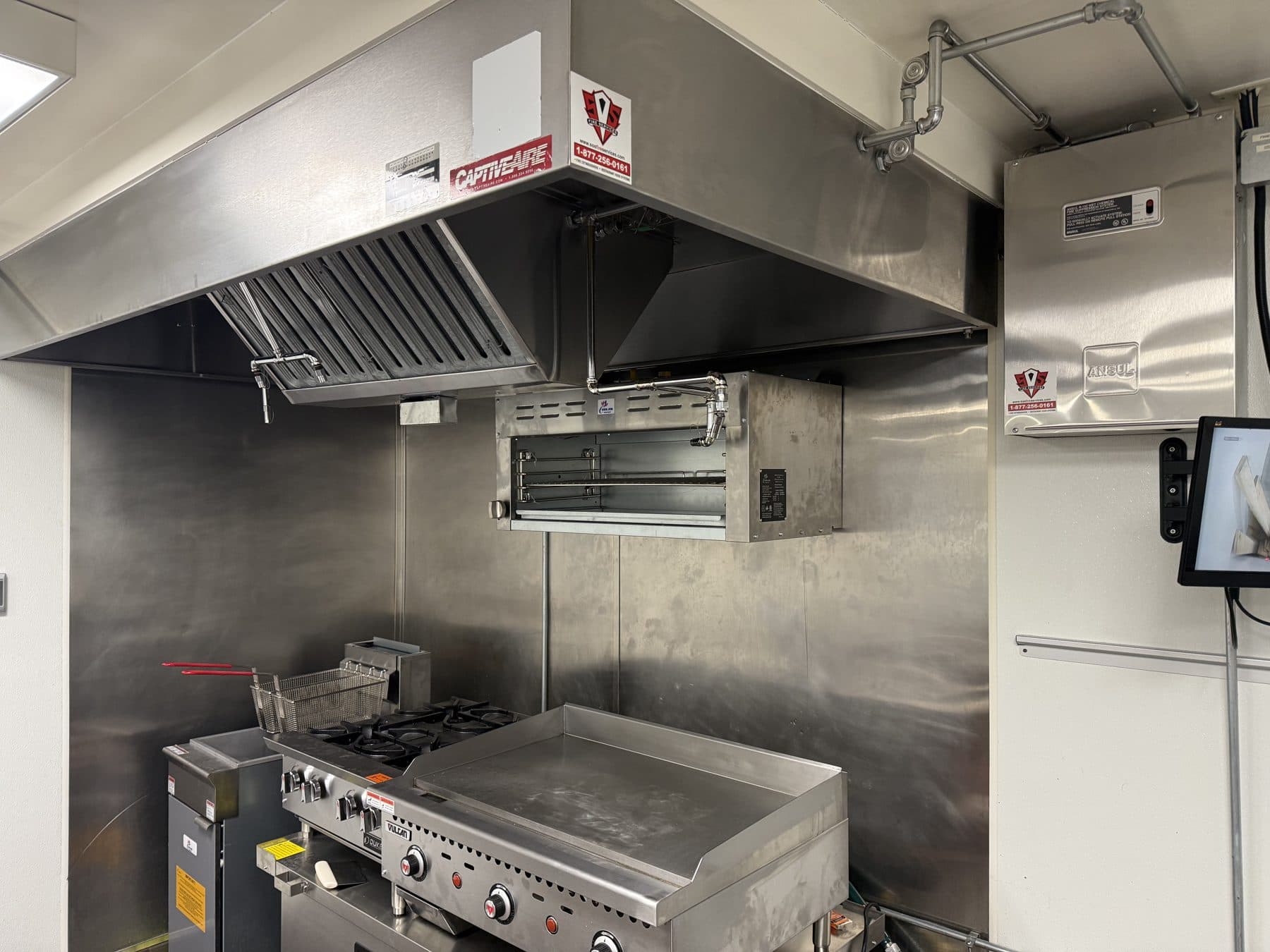
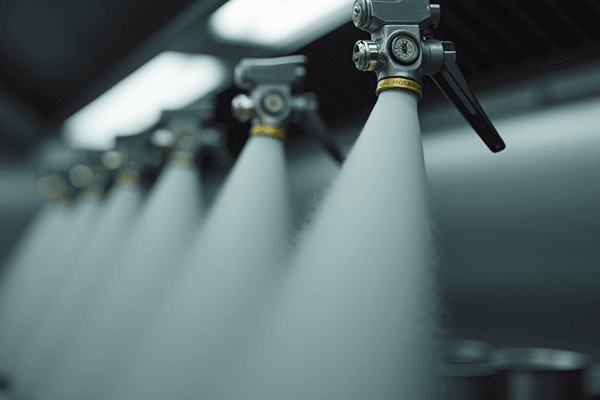
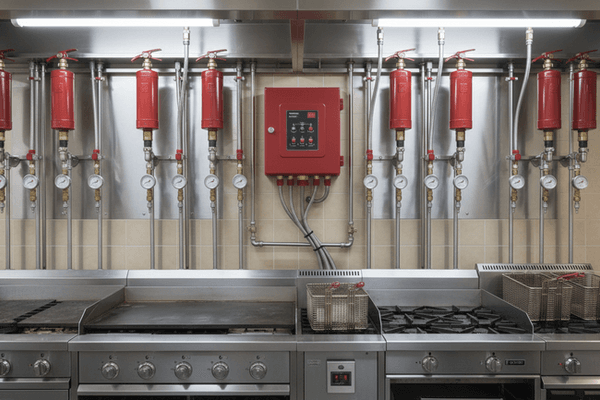
When a fusible link above the cook line melts, or someone pulls the station, the R-102 sprays wet chemical agent into the hood plenum, the duct and onto the appliances. At the same moment it cuts the gas and the electric heat to the cooking equipment under the hood. Where the building has a fire alarm, the system is usually tied into it and sets it off too. Our Emergency Discharge Reset page lists each of these steps.
One thing surprises many owners: the hood exhaust fan normally keeps running. ANSUL's manual says exhaust fans "should be left on", because the draft helps carry the agent through the hood and duct and then cools them. The fire code says the same, unless a listed part of the ventilation system or the system design calls for the fan to stop. What does shut down is the make-up air that blows in through the hood itself. If your fan stopped when the system fired, ask your technician whether your system was designed that way.
Why the gas won't come back on
That's on purpose. The California Fire Code requires the fuel and power shutoff to be automatic and the reset to be manual. With an electric gas valve, the valve stays closed until someone presses a reset relay, even after the power comes back.
Resist the urge to "just get the gas back." Turning the gas on while the system is empty means cooking with no fire protection over the line, and the next flare-up would have nothing to stop it. The technician restores gas and power after the system is recharged and tested. We also coordinate with the gas company when the job needs it.
Can I reset an Ansul system myself?
No, and in California it isn't a gray area.
- The law. Only a contractor with a CSLB C-16 license or a State Fire Marshal "A" license may service these systems as a business.
- The manufacturer. ANSUL requires recharge and maintenance by someone who completed its training, and it releases the recharge and reset instructions only to qualified people.
- The hazard. A recharge means a new pressurized gas cartridge, fresh agent and re-cocking a spring-loaded release. Done out of order, the system can fire again in your face.
- The paperwork. A system can be tagged as serviced only after every deficiency is fixed. Without that tag, you have nothing to show an inspector.
Here's what the technician does, in plain terms. They find out why the system fired, replace the expellant cartridge and refill the agent, and check the nozzles and piping. They deal with the fusible links: after a fire, ANSUL requires every link to be replaced. After an accidental discharge, we check each link and replace any that need it; the rest are cleaned. They reset and test the gas valves and electrical shutoffs, then tag the system and give you a written report. See Repair & Recharge for what a full recharge includes and what affects the cost.
Cleaning up the agent
ANSUL says to clean the agent off kitchen surfaces within 24 hours. The agent is mildly alkaline and low hazard, but it still calls for care:
- Make it safe first. Fuel off, hood and appliance controls de-energized, and every surface cooled to room temperature. The wet residue conducts electricity, and water on hot grease or oil causes violent steaming and spattering.
- Wear gloves and eye protection. If agent gets on skin or in the eyes, flush with clean water. The safety data sheet calls for rinsing eyes for at least 15 minutes.
- Throw out food and oil the agent touched. The agent is non-toxic, but that food is no longer fit to eat, and that includes the fryer oil.
- Sponge, wash, rinse, dry. Sponge up as much as you can, wash with warm water and detergent, rinse, and let everything dry completely before turning equipment back on.
Cleanup is usually done by your own staff or your kitchen cleaning company. Our technicians take care of the system itself.
Why did my Ansul system go off?
If there was no fire, something set it off, and finding out what keeps it from happening again. ANSUL's owner's guide and the manual point to these causes:
- Worn fusible links. Links age in grease and heat. A deteriorated link can let go without a fire.
- The exhaust was off while appliances were heating or cooling. Heat builds up under the hood and can reach the link's rating. Run the exhaust whenever the appliances are on.
- Filters missing or loaded with grease. Both change airflow and temperatures in the hood.
- A link rated too low for that spot. Links are chosen by the highest normal temperature where they hang. A hotter new appliance under an old link can trip it.
- A pull station that was bumped or pulled, or a detection line disturbed by hood cleaners. We see both of these often in the kitchens we service.
Two habits prevent most repeats. Call your servicer before you move, add or replace an appliance under the hood, because the nozzles are aimed at specific equipment. And have the system checked right after a hood and duct cleaning.
What California requires after a discharge
- Service right away, whatever the cause. Title 19 requires inspection, testing and maintenance "immediately after a system activation", and the California Fire Code requires service after any activation.
- Tell the fire department. While a required fire protection system is out of service, the fire code says to notify the fire department and the fire code official immediately. They may require a fire watch. If there was no fire and nobody called 911, that call is yours to make.
- The paperwork. After service, the licensee gives a written report to you and to the local fire authority. You keep the service certificate on site, and we can send the report to the fire department through The Compliance Engine.
- You get an estimate first. A licensee must give you a written estimate before making repairs and can't charge above it without your consent.
- Keep the records. Service records stay on the premises for five years after the next required service.
When can we start cooking again?
When all of these are done:
- The system has been recharged, reset, tested and tagged by a licensed technician.
- Gas and electric to the cook line have been restored by the technician, not by staff.
- The agent is cleaned up, and food and oil it touched have been thrown out.
- Any fire department instructions have been met. After a real fire, the fire department may also want to inspect, and your hood and duct may need cleaning.
If there was a fire, also call your insurance carrier before you throw anything away beyond spoiled food, and keep the technician's report. It records what happened and why.
Frequently asked questions
Does the exhaust fan turn off when the Ansul system goes off?
Normally no. The fire code and ANSUL's manual both have the hood exhaust fan keep running after a discharge, unless a listed component or the system design requires it to stop. The make-up air that blows in through the hood does shut off.
Is the Ansul chemical dangerous?
It's low hazard. The current safety data sheet does not classify it as hazardous under OSHA rules, but it can irritate eyes and skin, so wear gloves and eye protection when cleaning. Throw out any food it touched.
There was no fire. Do I still need a technician?
Yes. California requires service immediately after any activation, real or accidental, and the system protects nothing until it's recharged.
Do I have to call the fire department if there was no fire?
Yes. The fire code says to notify the fire department while a required fire protection system is out of service. If nobody called 911, make that call yourself.
Why won't my gas turn back on after the Ansul went off?
The shutoff is designed to need a manual reset after the system is recharged. A technician restores it as part of the service.
System discharged? We're on call 24/7
SOS Fire Services is an Authorized ANSUL Distributor & Dealer, licensed under CSLB C-16 #976500, with technicians factory-trained on the R-102. After a discharge we find the cause, recharge and reset the system, restore your gas and power, and document the service. We answer around the clock, nights, weekends and holidays included, with a 2-hour response target and a same-day reset.
Call (877) 256-0161 or see Emergency Discharge Reset. For routine service, see ANSUL System Service, and for the twice-a-year visit, our post on kitchen suppression inspections.
Sources
- R-102 Restaurant Fire Suppression System: Design, Installation, Recharge and Maintenance Manual (ANSUL, Part No. 418087-12)
- R-102 Restaurant Fire Suppression System Owner's Guide (ANSUL, Part No. 418127)
- R-102 Restaurant Fire Suppression System Data Sheet (Johnson Controls, 2024)
- ANSULEX Low pH Liquid Agent Safety Data Sheet (Tyco Fire Protection Products)
- California Fire Code 2025, Chapter 9: Fire Protection and Life Safety Systems
- Cal. Code Regs. tit. 19, § 904: Inspection, testing and maintenance frequencies
- Cal. Code Regs. tit. 19, § 904.2: Testing and maintenance requirements
- Cal. Code Regs. tit. 19, § 905: Licensing
- Orange County Fire Authority Guideline D-02: Fire Extinguishing Systems for Commercial Cooking Operations (2026)