If you own a restaurant, "fusible links" shows up on your service invoice every time the fire suppression company visits. It's a small part, and most owners never look at one. It's also what tells your system there's a fire. This article explains what a link does, why it's replaced on a schedule even when it looks fine, and why you may hear two different answers about how often.
We use the ANSUL R-102 as the example here. Other brands follow their own manuals, and we replace links on all the brands we service.
What a fusible link does
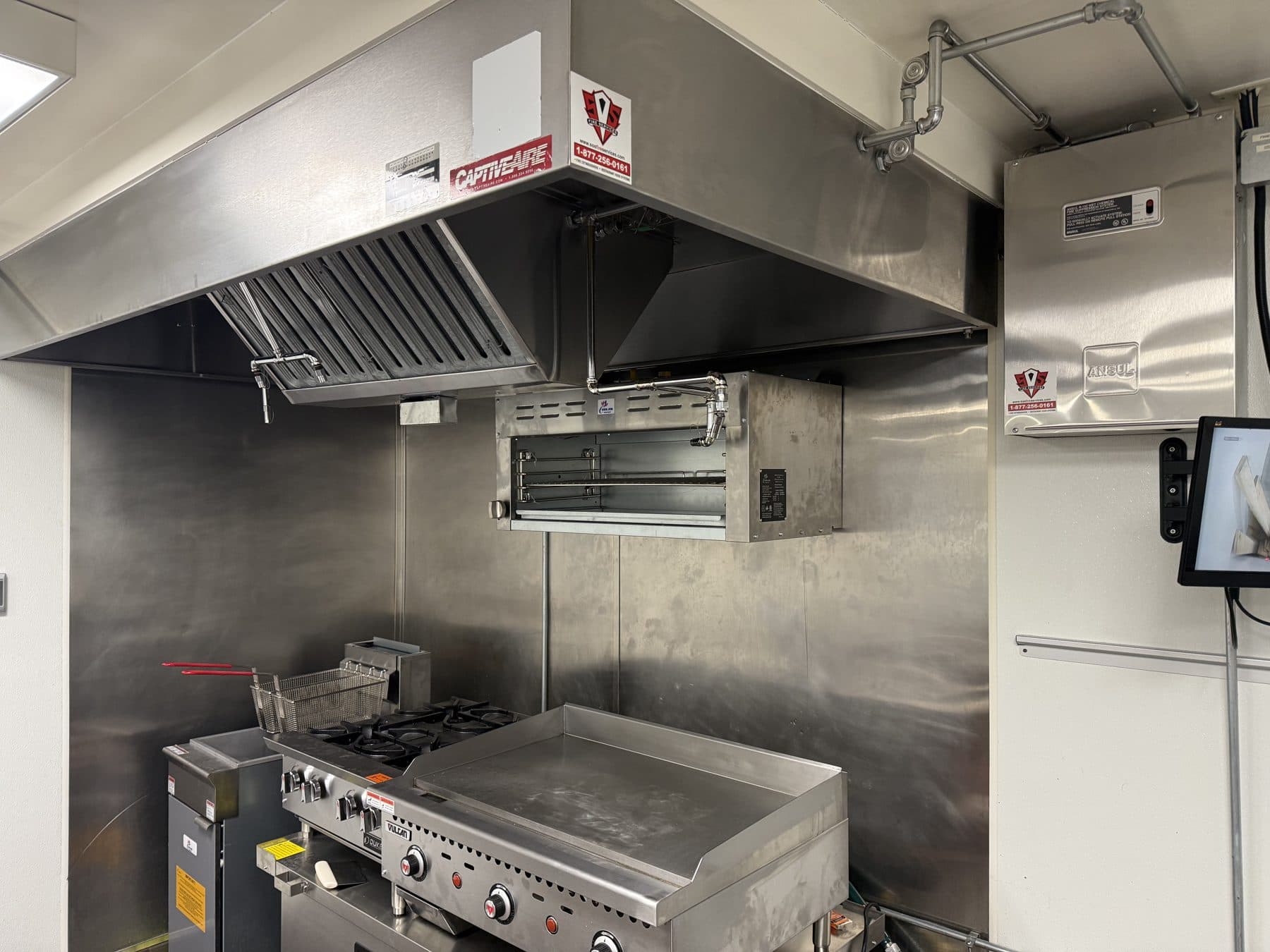
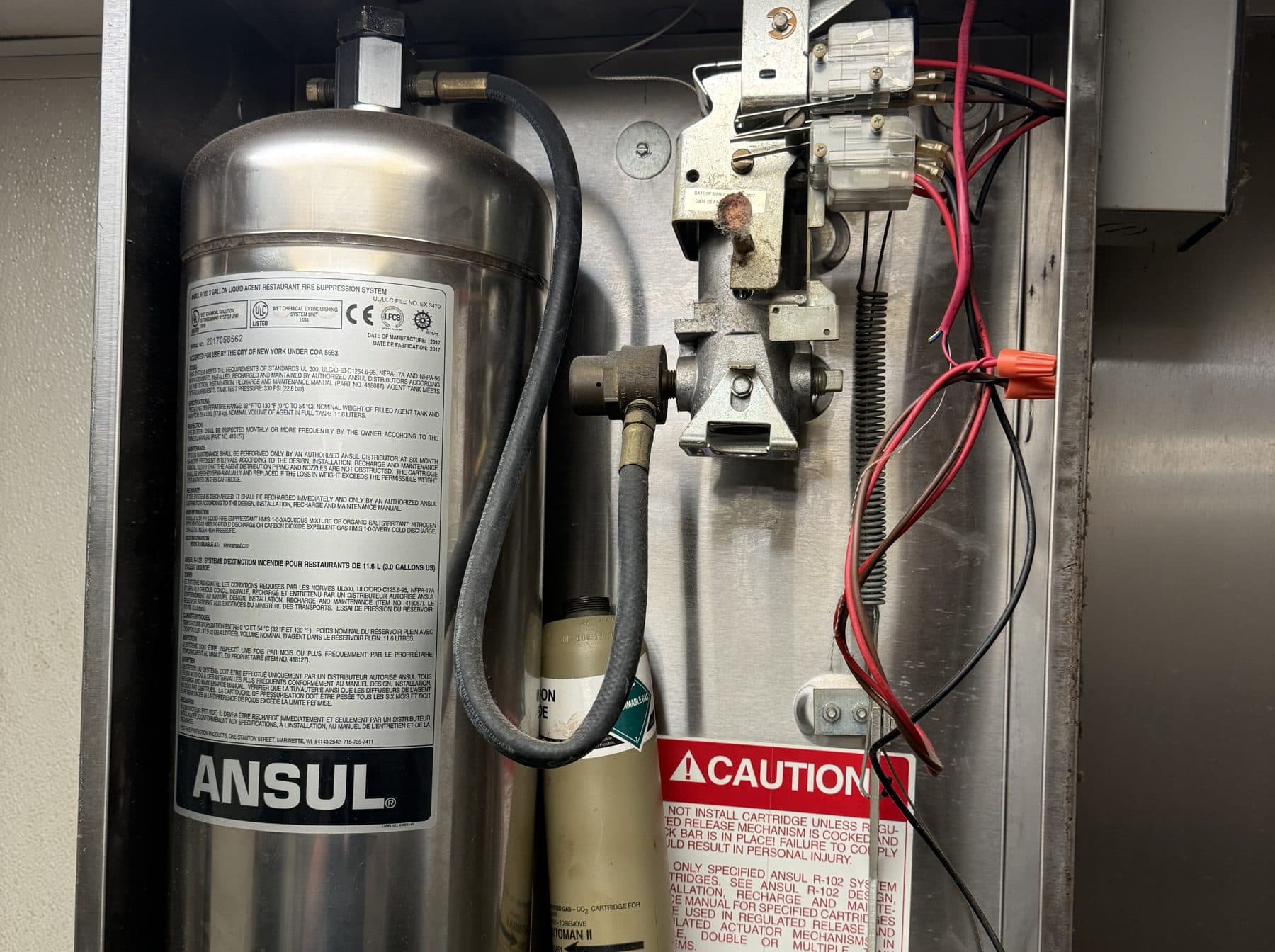
A fusible link is two small metal plates held together by an alloy that lets go at a set temperature. Links sit in detectors above your cook line and in the entrance to each exhaust duct. They all hang on one steel cable that's held under tension at the release. When any single link separates, the cable goes slack and the system fires, with no power and no button needed.
Our post on how the ANSUL R-102 works follows that sequence from the link to the foam.
How often are fusible links replaced?
Every six months, at the semi-annual service. ANSUL's manual tells the technician to remove and destroy all existing links at the semi-annual exam and fit new ones of the right rating. ANSUL's owner's guide says the same thing in plain terms. NFPA 17A, the wet chemical standard the 2025 California Fire Code references, says at least semiannually, or more often if needed, counted from the date of installation.
Why you may have heard "annually"
Because the California Fire Code says it. Section 904.14.5.3 reads that fusible links "shall be replaced annually," and the Orange County Fire Authority's guideline repeats it. You'll find that line quoted online as the whole rule.
It isn't, for two reasons:
- Title 19 adds the manufacturer's instructions. The fire code sends maintenance of these systems to Title 19, and Title 19 requires it to follow the manufacturer's written instructions on file with the State Fire Marshal, plus the adopted standards. OCFA's guideline also requires maintenance by the manufacturer's manual.
- California's own form expects it. The state's semi-annual report for wet chemical systems has a line for replacing metal alloy detectors.
So "annually" is the minimum in one code section, and the system's manual sets the real interval. On an R-102, that's six months. We replace every link at every semi-annual visit, on every system.
Why replace a link that looks fine?
Because a link can't be judged by looking at it, and the cost of being wrong runs both ways. ANSUL's reason is one sentence: deterioration "could cause the system to be actuated or to malfunction in case of a fire."
- It can let go too early. A worn link can release with no fire and dump the system in the middle of service.
- It can fail when you need it. Links live in grease and heat. ANSUL warns that excessive grease deposits can leave a system inoperative.
- The alloy is always under load. The cable pulls on each link around the clock, and NFPA's committee record describes solder creep as a trait of metal alloy links.
The rule counts from installation, so it's time that matters, not how clean the link looks. The date stamped on a link is when it was made, not an expiration date. California's report records both dates separately.
The temperature rating isn't one size fits all
Every link has a rating, and the right one depends on the highest normal temperature where it hangs. ANSUL's chart for the R-102:
| Link rating | Use where the temperature doesn't exceed |
|---|---|
| Link rating 165 °F | Use where the temperature doesn't exceed 100 °F |
| Link rating 212 °F | Use where the temperature doesn't exceed 150 °F |
| Link rating 280 °F | Use where the temperature doesn't exceed 225 °F |
| Link rating 360 °F | Use where the temperature doesn't exceed 290 °F |
| Link rating 450 °F | Use where the temperature doesn't exceed 360 °F |
| Link rating 500 °F | Use where the temperature doesn't exceed 400 °F |
So a link over a charbroiler usually needs a higher rating than one in a cooler spot. The rating is set by temperature readings at each detector, not by guesswork.
A link rated too low can trip from normal cooking heat, which is one of the causes of a false discharge. A link rated too high takes more heat to let go, so it responds later to a real fire. Raising the rating to stop false trips isn't a fix. The fix is finding out why that spot runs hot. That's also why you should call your servicer before you swap an appliance under the hood. When a change calls for it, we take temperature readings and change the link ratings.
What happens at the service visit
Here's what you should expect, in plain terms. The technician uses a test link to simulate a link separating, which proves the cable runs free and the release fires. The old links come out and are destroyed so they can't be reused. New links of the correct rating go in. The cable is inspected at the detectors, pulleys and release, and replaced if it's worn or frayed.
Grease can get into that line too. In one Glendale wok kitchen, grease had seized the detection line, and we replaced the cable, pulleys, brackets and links before completing the service. See our Semi-Annual Inspection page for everything the visit covers.
Hood cleaning and fusible links
This is where owners can do the most good, because the risk comes from a vendor you hired.
- No harsh chemicals on links or cables. ANSUL says never to use corrosive solutions on them, and warns that certain high alkaline cleaners can cause corrosion. Make sure your hood cleaner knows.
- Links are often wired shut during cleaning so the system doesn't fire by accident. If that wire stays on, the system won't operate automatically. We don't find this too often, but it's worth checking after every cleaning.
- Have the system checked right after a major cleaning. ANSUL asks for this. Booking your semi-annual service right after the hood cleaning takes care of it.
Can I replace fusible links myself?
No. The links are part of a spring-loaded, tensioned release, and a mistake can fire the system or leave it unable to fire. ANSUL requires this work to be done by someone it trained, and California limits it to licensed contractors. If a link looks damaged, call your servicer.
What to look for on your paperwork
- The invoice. It must be itemized and show the parts replaced. We bill links per link, so you'll see them listed.
- The report. The semi-annual report records each group of links by quantity, temperature, manufacture date and install date. It stays on site, and a copy goes to your fire authority.
If the install dates on your report are more than six months old, ask why.
After a discharge
If the system fired because of a real fire, every link must be replaced. For everything else that follows a discharge, see what to do when your Ansul system goes off.
Frequently asked questions
How often should fusible links be replaced in a kitchen hood?
Every six months on an ANSUL R-102, at the semi-annual service. The California Fire Code's "annually" is a minimum; Title 19 also requires following the manufacturer's instructions.
What temperature do fusible links melt at?
ANSUL's R-102 links are rated from 165 °F to 500 °F, chosen by the highest normal temperature at each spot.
Do glass bulb detectors need replacing too?
The fire code exempts frangible bulbs from its annual rule, but NFPA 17A puts glass bulbs under the same semi-annual replacement as metal links. NFPA's committee reasoned that they're almost impossible to clean.
Can a hood cleaner clean the fusible links?
They shouldn't use chemicals on them. Links get replaced at the semi-annual service, so ask your cleaner to leave them alone and have the system checked after the job.
Is the date on a fusible link an expiration date?
No. It's the date the link was made. The six months count from the day it's installed.
Fusible link service from SOS Fire Services
SOS Fire Services is an Authorized ANSUL Distributor & Dealer, licensed under CSLB C-16 #976500, with technicians factory-trained on the R-102. We inspect, test and replace links as part of our semi-annual kitchen service across Los Angeles, Orange, Ventura and San Bernardino counties.
Call (877) 256-0161 or see our Semi-Annual Inspection and ANSUL System Service pages.
Sources
- R-102 Restaurant Fire Suppression System: Design, Installation, Recharge and Maintenance Manual (ANSUL, Part No. 418087-12)
- R-102 Restaurant Fire Suppression System Owner's Guide (ANSUL, Part No. 418127)
- California Fire Code 2025, Chapter 9: Fire Protection and Life Safety Systems
- California Fire Code 2025, Chapter 80: Referenced Standards
- Automatic Fire Extinguishing Systems Laws and Regulations, Title 19 Chapter 5 (Office of the State Fire Marshal, 2026)
- Title 19 Inspection, Testing and Maintenance Forms (Office of the State Fire Marshal)
- NFPA 17A Public Input Report, 2024 Edition Cycle
- Orange County Fire Authority Guideline D-02: Fire Extinguishing Systems for Commercial Cooking Operations (2026)